The power goes out on a hot afternoon, your submersible pump falls silent, and the overhead tank runs dry by evening. I have lived that exact scene more than once at my own place. After 15 years of running a borewell, pump, and overhead-tank setup, the fix that gave me the most peace of mind was also the simplest: a hand pump for borewell backup that draws from the same casing my submersible uses.
A manual pump will not replace your submersible, but it keeps drinking and washing water within reach when the grid fails. In this guide I will walk you through which type suits your water depth, what a realistic install costs, and the step-by-step process I followed. If you are still learning the basics, start with how a borewell actually works and come back.
Key Takeaways
- A hand pump works best when the water level sits within roughly 7-8 metres of the surface for suction types, and deeper (down to 45-50 metres) for force-lift types like the India Mark 2.
- Most home installs land between ₹4,000 and ₹18,000 depending on pump type and depth.
- Your borewell casing diameter must physically fit the pump cylinder, so measure before you buy.
- A hand pump gives you borewell backup during a power cut with zero fuel, wiring, or running cost.
- You can install a lightweight shallow-well pump yourself in an afternoon; deep-set cylinders often need two people and a pipe wrench.
Can you even fit a hand pump to a borewell?

Yes, in most cases. The two things that decide it are how deep your water sits and how wide your borewell casing is. A hand pump moves water either by suction (pulling it up from above) or by lift (pushing it up from a cylinder set below the water line). Suction has a hard physical ceiling; lift does not.
Before buying anything, find your static water level. That is the depth at which water naturally stands when the pump is off. If you have never checked it, our guide on measuring well yield and recovery rate at home shows a simple weighted-string method that also reveals your water depth.
The suction limit nobody warns you about
A suction hand pump cannot pull water from more than about 7-8 metres deep, and in practice closer to 6 metres in warm regions. This is physics, not marketing: a column of water can only be lifted so far by atmospheric pressure. If your water sits deeper than that, a cheap suction pump will hiss air and give you nothing.
Why the India Mark 2 goes deeper
The India Mark 2 hand pump solves the depth problem by placing a brass cylinder and piston down inside the water, connected to the handle by a long rod. Each stroke lifts a slug of water up the riser pipe. Because it lifts rather than sucks, it comfortably serves water sitting 30-45 metres down, which covers a large share of Indian borewells.
Types of hand pump and which one fits your depth
Matching the pump to your water depth is the single decision that makes or breaks this project. Here is how the common options compare, using price ranges I have seen at hardware suppliers and borewell contractors.
| Pump type | Works to depth | Rough cost (pump + fittings) | Best for |
|---|---|---|---|
| Shallow suction (cast iron / PVC) | Up to 6-7 m | ₹4,000-₹7,000 | High water tables, dug wells, coastal belts |
| India Mark 2 (force lift) | Up to 45-50 m | ₹9,000-₹18,000 | Standard deep borewells, village and farm use |
| India Mark 3 / VLOM | Up to 30 m | ₹8,000-₹15,000 | Easier one-person maintenance, community taps |
| Direct-action (Tara type) | Up to 12-15 m | ₹5,000-₹9,000 | Moderate depth, low effort, light households |
One point the table cannot show: the deeper your cylinder sits, the heavier each stroke feels. A Mark 2 set at 40 metres is a real workout after a few buckets, so if your water is shallow enough for a direct-action pump, your arms will thank you.
Tip: Before you order, drop a torch down the casing and measure the inner diameter of the pipe. My borewell uses a 150 mm casing, and the Mark 2 cylinder slid in with room to spare. A 100 mm casing rules out some fatter cylinders, so confirm the fit with your supplier first.
What it costs to run alongside a submersible
The best part of a manual pump is the running cost, which is basically nothing. There is no electricity bill, no fuel, and no starter or capacitor to burn out. Once the hardware is in, your only spend is the occasional washer, leather cup seal, or bolt.
- Upfront: ₹4,000-₹18,000 for the pump and pipe, as shown above.
- Installation labour: ₹500-₹2,500 if a contractor sets a deep cylinder for you.
- Yearly upkeep: a leather cup seal costs ₹80-₹200 and is the part most likely to wear.
Compared with a diesel generator or an inverter sized to start a submersible, a hand pump is a fraction of the price and never leaves you stranded by an empty fuel can.
How to install a hand pump at home, step by step
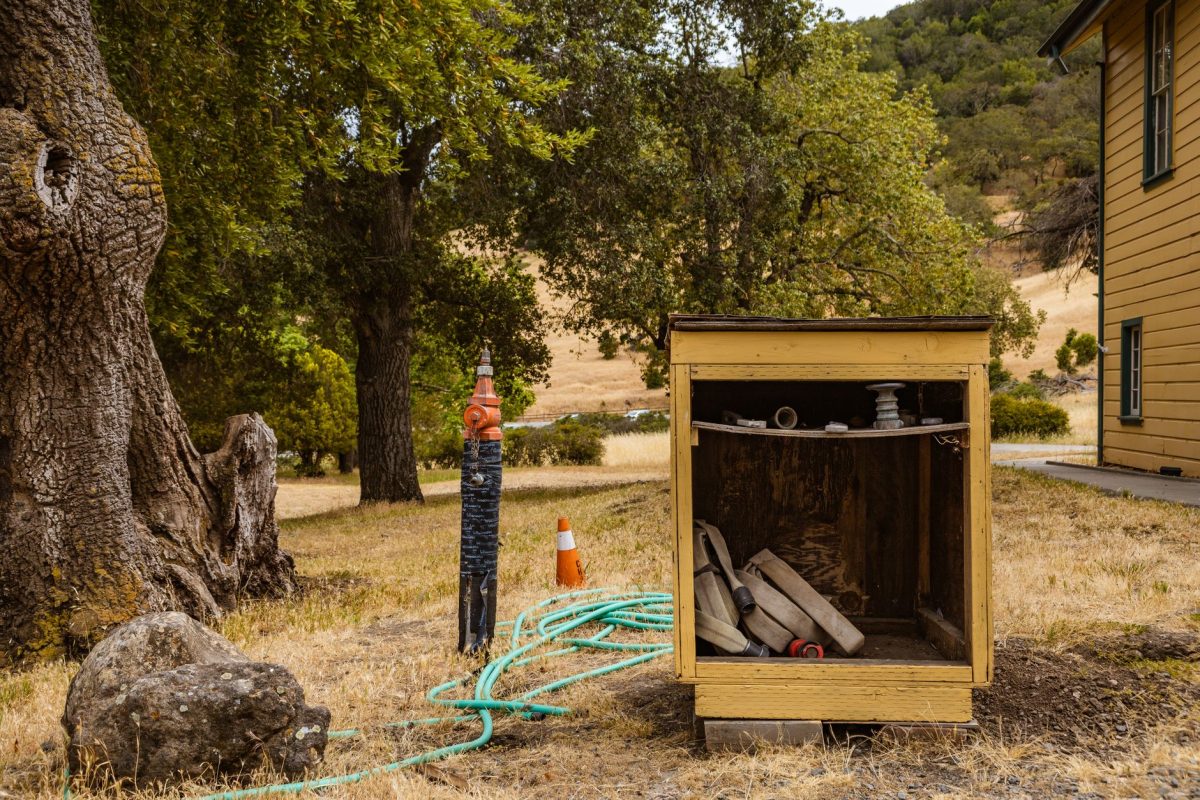
These steps cover a common setup where the hand pump shares the existing borewell alongside a submersible. If your casing is already crowded with the submersible pipe and cable, talk to your borewell contractor first, because clearance matters. To install a hand pump at home on a shallow well, most people can follow this in an afternoon.
- Confirm your static water level and casing diameter, then pick the pump type from the table above.
- Switch off the submersible at the mains and lock it out so nobody starts it while you work.
- Lay out the pump head, stand, riser pipes, connecting rods, and cylinder in order on a clean tarp.
- For a lift pump, join the cylinder to the first riser pipe, seal the threads with tape or jointing compound, and lower it slowly, adding pipe and rod lengths as you go.
- Keep the assembly straight and never let it drop; a dropped string in a borewell is a genuinely expensive mistake to fish out.
- Mount the pump head on its concrete or steel base once the cylinder sits below the water line, then bolt it down firmly.
- Attach the handle, prime a suction pump with a jug of water if needed, and pump steadily until water flows.
- Check every joint for leaks, tighten the base bolts, and run 20-30 strokes to clear cloudy first water.
On my own borewell, the fiddly part was keeping the rod couplings square as we lowered them. A second person on the pipe wrench turned a frustrating job into a 90-minute one. When I later replaced the worn cup seal, the whole pull-and-reset took under an hour because I had labelled each pipe length the first time.
Safety note: A hand pump sharing a borewell does not automatically make the water safe to drink. If you plan to drink from it, get a sample checked at a certified lab, since surface runoff and old casings can let contaminants in. Confirm any health concern with a qualified professional rather than assuming clear water is clean water.
Is a hand pump actually worth it as backup?
For anyone in an area with long or frequent power cuts, I think it earns its keep. During a monsoon outage that lasted most of a day, my family drew washing and toilet water by hand while neighbours queued at a tanker. The pump paid for itself in that one stretch, in convenience if not in rupees.
It is less compelling if your supply is rock steady or your water sits very deep, where each stroke becomes hard labour. In those cases an inverter or a second overhead tank may serve you better. If you are still planning a new bore, our advice on choosing where to drill your borewell can help you land a shallower, easier water table in the first place.
For the full picture on wells, pumps, tanks, and testing, our complete homeowner’s guide to private wells and water sources ties these topics together in one place.
Frequently Asked Questions
Can you fit a hand pump to a borewell?
In most cases yes, as long as your casing is wide enough for the cylinder and your water depth suits the pump type. Shallow water suits a suction pump, while deeper water needs a force-lift model such as the India Mark 2 set below the water line.
How deep can a hand pump draw water?
A suction pump is limited to about 6-8 metres because atmospheric pressure can only lift water so far. A force-lift pump with a submerged cylinder, like the India Mark 2, comfortably serves water sitting 30-45 metres deep, and some models reach close to 50 metres.
Is a hand pump worth it as a backup?
If you face regular power cuts, yes. It draws water with no electricity, fuel, or running cost, and it keeps working when your submersible cannot. It is less useful if your supply rarely fails or your water table is very deep, which makes hand pumping hard work.
Can a hand pump and submersible share the same borewell?
Often yes, if the casing has enough clearance for both the submersible pipe and the hand pump cylinder or suction line. On narrow 100 mm casings it can get tight, so check spacing with your borewell contractor before committing to a deep-set cylinder.
How much maintenance does a hand pump need?
Very little. The main wear part is the leather cup seal on the piston, which may need replacing every year or two with regular use. Occasional bolt tightening and greasing the handle bearing keep it smooth. A worn seal shows up as weaker output per stroke.
Where that leaves you
A hand pump will not match your submersible for speed, but as a no-power, no-fuel fallback it is hard to beat. Measure your water depth, match the pump type, confirm your casing fits, and you have a backup that quietly works for years. For water you intend to drink, always confirm quality with a certified lab, and check trusted sources such as the World Health Organization and India’s Central Ground Water Board for groundwater guidance. When you are ready to plan the rest of your system, browse the full Wells and Water Sources collection for the next step.