The municipal line went silent for two and a half days one May, and half my street was hauling pots from a tanker by the second morning. My family barely noticed, because I had already worked out how much water we actually burn in a day and sized our tanks around a bad week, not a good one. Getting water storage for supply cuts right is less about buying the biggest tank you can afford and more about honest math on your real usage. After 15 years running my own borewell, pump and overhead-tank setup, I have refined this into a simple sizing method. Below, you will learn exactly how much to store per person, how to size your tank for a two or three day outage, and how to prep before the hot season bites.
Key Takeaways
- Plan for roughly 100-135 litres per person per day for normal living, or 40-60 litres in strict rationing mode.
- To survive a three-day cut, a family of four needs about 1,200-1,600 litres of usable backup, plus a buffer.
- Size for your longest realistic outage, not the average one, summer cuts stack up fast.
- Keep 20-30% of capacity as headroom so you refill before you hit empty.
- Storage only helps if the water stays clean, so pair capacity with a covered, maintained tank.
Why summer supply cuts catch households off guard
Supply cuts rarely announce themselves clearly. In summer, reservoirs drop, borewells across a locality draw harder, and municipal bodies quietly move to alternate-day or reduced-hour supply. What was a predictable morning fill becomes a gamble.
The households that struggle are not the ones with small tanks, they are the ones who never measured their daily use. If you do not know your number, any tank size is a guess. So the first job of planning backup water capacity is figuring out how much your home genuinely consumes on a normal day.
Step 1: Know your real daily water use
Per-person figures vary a lot with lifestyle, but these ranges are a sane starting point for an Indian household. Bathing habits, whether you have a washing machine, and how much you cook all move the needle.
| Usage mode | Litres per person / day | What it covers |
|---|---|---|
| Comfortable / normal | 100-135 L | Bathing, cooking, washing, cleaning, flushing, garden |
| Careful (cut looming) | 60-90 L | Short bucket baths, essential washing, normal drinking/cooking |
| Strict rationing (emergency) | 40-60 L | Drinking, cooking, one sponge-wash, minimal flushing |
To find your own figure, read your inlet meter (or note tanker deliveries) across a normal week and divide by the number of people and days. On my own setup, four of us average close to 120 litres each per day in summer once the garden and a daily wash load are counted, higher than most people guess.
Tip: Don’t average your winter and summer use together. Summer is when the cuts hit and when consumption peaks, garden watering, extra baths, more drinking. Size on your July number, not your January one, or you will come up short exactly when it matters.
Step 2: Decide how many days of backup you need
Ask your neighbours and think back over the last few summers. In many areas, cuts run one to three days; in a bad drought year or during pipeline repairs, a locality can go five to seven. Your target is your worst realistic outage, not the typical one.
- Reliable municipal + backup borewell: 1-2 days of storage is usually enough.
- Municipal-only, occasional cuts: aim for 3 days.
- Tanker-dependent or drought-prone: plan for 4-5 days, plus a refill plan.
Step 3: Do the sizing math
The core formula for tank size for water shortage is simple:
People × litres per person per day × days of backup × buffer = usable storage needed.
- Count the people in your home (add half a person’s worth for regular guests).
- Pick your daily litres figure, normal for comfort, or careful mode if you plan to ration during a cut.
- Multiply by the number of backup days you settled on.
- Add a 20-30% buffer so you never actually scrape the tank bottom (sludge and sediment sit there).
Here is what that looks like for a family of four planning a three-day cut in careful mode (say 90 L/person/day): 4 × 90 × 3 = 1,080 litres, plus a 25% buffer ≈ 1,350 litres of usable storage. Round up to the nearest common tank and you land on 1,500 L.
| Household size | 2-day cut (careful) | 3-day cut (careful) | 3-day cut (comfortable) |
|---|---|---|---|
| 2 people | ~450 L | ~675 L | ~1,000 L |
| 4 people | ~900 L | ~1,350 L | ~2,000 L |
| 6 people | ~1,350 L | ~2,000 L | ~3,000 L |
Notice how quickly the numbers grow when you want full comfort during a long cut. This is why most homes settle on a mix: enough overhead storage for daily comfort, plus a larger ground sump that carries the household through outages. If you are weighing that split, my walkthrough of a dual sump-plus-overhead tank setup shows how the two work together.
Choosing where the extra capacity lives
Overhead vs underground sump
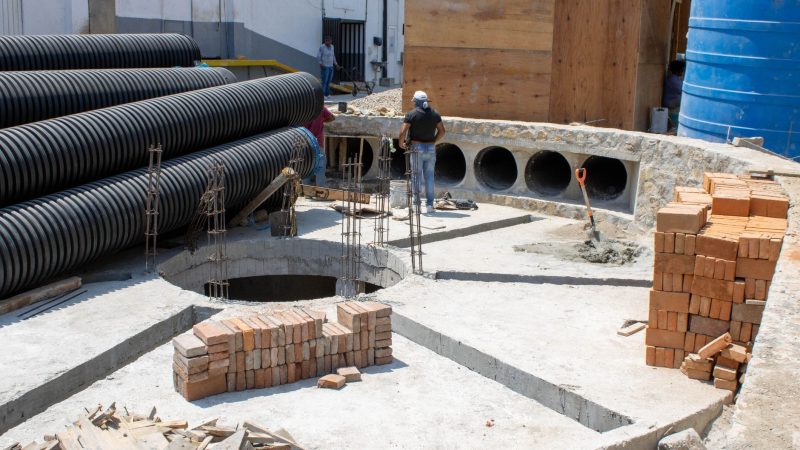
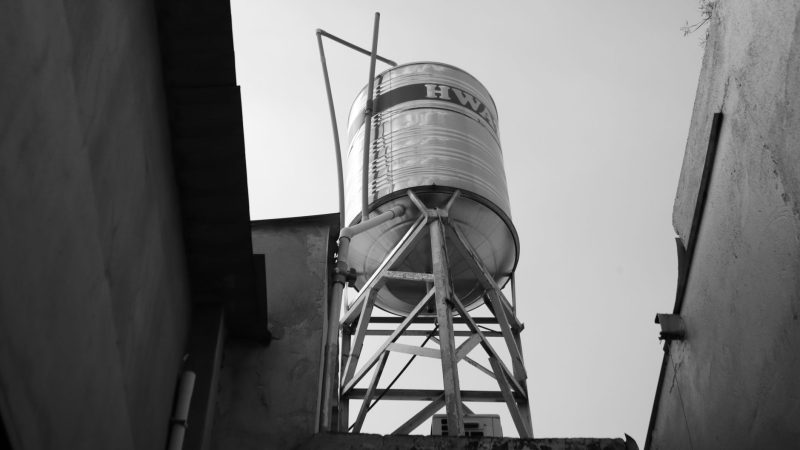
Overhead tanks give you gravity pressure and are easy to fill, but rooftop weight limits how big they can be, most homes cap out at 1,000-2,000 litres up top. Underground or ground-level sumps can hold far more (3,000-10,000+ litres) cheaply, but need a pump to lift water. For serious supply-cut resilience, extra capacity almost always belongs in a sump.
Material and cost
Triple-layer plastic tanks are the default for overhead use and hold up well against UV and heat. For big sump capacity, a built (RCC) underground tank is often cheaper per litre. In my experience, adding 1,000 litres of plastic overhead storage typically runs somewhere in the ₹6,000, ₹12,000 range fitted, while a built sump is costed per cubic metre and varies widely by region. For a fuller breakdown, see our guide to what water storage really costs.
Watch out: More stored water is only an asset if it stays safe to use. Water that sits for days in a warm, poorly covered tank can grow algae and breed mosquitoes. Keep tanks lidded, screened, and cleaned. For anything you drink, confirm quality with a certified lab rather than assuming stored water is fine, heat and stagnation change things.
Prepping your storage before the hot season
Sizing is half the job. The other half is making sure your summer water storage in India is actually ready before the first cut lands. Run this quick prep in early spring.
- Clean and disinfect every tank and sump so you start the season with a full, fresh reserve.
- Check and fix the float valve or level indicator so tanks always top up when supply returns.
- Test your pump and its pressure switch, a summer cut is a terrible time to discover a dead pump.
- Seal lids and fit mosquito mesh on overflow and vent pipes.
- Keep the sump topped up whenever supply is flowing, so a surprise cut catches you full, not half-empty.
- Store 15-20 litres of clearly labelled drinking water separately as an emergency reserve.
The disinfection step matters most. Skipping a pre-season clean means you spend the summer drawing from a tank you never checked. For a repeatable routine, work through our printable home water tank maintenance checklist, it covers exactly what to scrub and how often.
For guidance on safe drinking-water quantities during shortages, the World Health Organization is a solid non-commercial reference, and India’s Central Ground Water Board publishes useful groundwater and monsoon outlook data if you rely on a borewell.
Making stored water last longer during a cut
When a cut actually hits, small habits stretch your reserve well beyond what the raw numbers suggest:
- Switch to bucket baths, they use a fraction of a shower or a full geyser tank.
- Reuse rinse water from clothes for floors and flushing.
- Pause the garden and car washing entirely until supply returns.
- Fix any dripping tap immediately; a slow drip wastes many litres a day you cannot spare.
- Draw drinking water from your labelled reserve first so you always know what is safe.
Done together, these can drop a family from comfortable mode to careful or even strict mode, effectively doubling how many days a full tank lasts. That is how a well-sized 1,500-litre tank can carry a household through a cut that empties an unmanaged home in a day.
Frequently Asked Questions
How much water should I store for a supply cut?
Plan for the number of people times your daily litres (100-135 L each for comfort, 40-60 L in strict rationing) times the days of backup you expect, plus a 20-30% buffer. For most four-person homes, 1,200-1,600 usable litres covers a solid three-day outage comfortably.
What tank size covers three days of use?
For a family of four in careful mode (about 90 L each per day), roughly 1,350 usable litres covers three days once you add a buffer, so a 1,500 L tank fits. Two people need around 675 L; six people need about 2,000 L. Scale the formula to your own household.
How do I prepare storage for summer shortages?
Before summer, clean and disinfect all tanks, fix float valves and level indicators, test the pump and pressure switch, seal lids with mosquito mesh, and keep your sump topped up whenever supply flows. Also stash 15-20 litres of labelled drinking water as a separate emergency reserve.
Is it better to add an overhead tank or an underground sump?
For daily comfort and gravity pressure, add overhead capacity, but rooftop weight limits usually cap it around 1,000-2,000 litres. For large supply-cut reserves, an underground or ground-level sump holds far more per rupee. Most resilient homes combine a modest overhead tank with a bigger sump feeding it.
Can stored water go bad during a long outage?
Yes. Water sitting for days in a warm, poorly covered tank can grow algae, pick up odours, and breed mosquitoes. Keep tanks lidded, screened, and cleaned, and rotate the water when you can. For drinking use during a long cut, confirm safety with a certified lab rather than assuming it is fine.
Putting it together
Surviving a summer supply cut is not about panic-buying the biggest tank on the shelf, it is about knowing your real daily use, choosing a realistic worst-case outage, and doing five minutes of simple math with a sensible buffer. Get that right, add a pre-season clean, and a cut becomes a non-event instead of a scramble to the tanker queue. When you are ready to plan the whole system around it, our complete home guide to storage tanks and distribution ties sizing, sumps, pumps and maintenance together, a calm, unhurried read before the heat arrives.