A neighbour once told me to paint my overhead tank white because “the black one is a bacteria factory.” Around the same time, another swore that stored water is basically undrinkable after a day. Both were wrong, and both were wasting effort on the wrong problems. After 15+ years running my own borewell, pump and overhead-tank setup, I’ve heard nearly every water tank myth going, and tested most of them the hard way. This post sorts the real water tank myths and facts from the rumours, so you know exactly what actually keeps your stored water clean and what’s just noise.
Key Takeaways
- Algae needs light, not a particular tank colour, so a light-blocking lid matters far more than whether the tank is black.
- Stored water isn’t automatically unsafe, but it can go bad if the tank is dirty, uncovered, or left standing for weeks.
- Even a covered, “sealed” tank still needs cleaning roughly every 6 months, sediment and biofilm build up regardless.
- Sunlight can help (UV) or hurt (warmth + light feeds algae), depending entirely on whether light reaches the water.
- When in doubt about drinking safety, a certified lab test beats every rule of thumb and every internet myth.
Why water tank myths spread so easily
Most water storage misconceptions start from a grain of truth and then harden into rules nobody questions. Someone sees green slime once, blames the nearest visible difference (the colour, the sunlight, the plastic) and passes it on. The advice sticks because you can’t see bacteria, so people cling to whatever they can see. The trouble is that chasing the wrong myth means you relax about the things that genuinely matter. Let’s take the big ones one at a time.
Myth 1: Black tanks cause more algae
This is the most stubborn of the black tank myths. The logic goes: black absorbs heat, warm water grows algae, therefore black tanks are worse. It sounds reasonable and it’s mostly backwards.
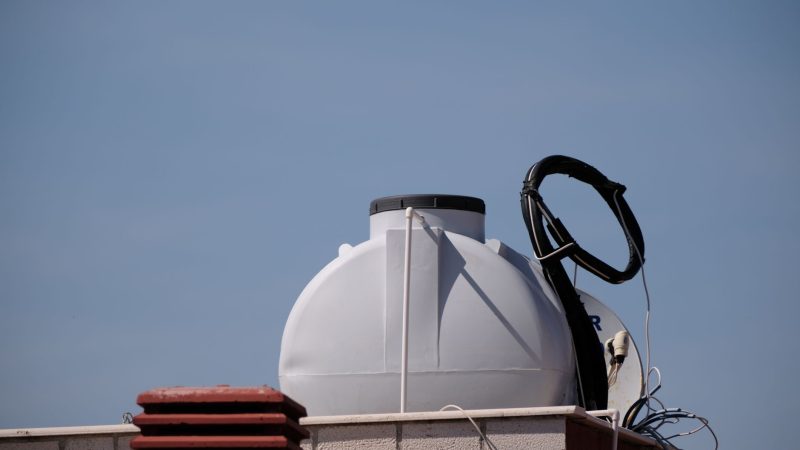
The fact: algae are plants. They need light to photosynthesise and grow. A dark, opaque tank wall actually blocks light better than a pale, translucent one. On my own roof, the cheap semi-translucent white tank I started with grew a green film along the sunny side within a couple of months. The three-layer tank with a black inner layer I replaced it with has stayed clear for years, because almost no light gets through the wall to the water.
Yes, a black outer surface heats up more in direct sun. But warmth alone won’t bloom algae in the dark. Cut off the light and you cut off the algae, whatever the colour. If you’re stuck with a translucent tank, the fix isn’t repainting, it’s shading it or wrapping it so light can’t reach the water.
Tip from my roof: If you can see daylight through the tank wall when you shine a torch on the far side, algae can grow. Modern 3-layer or 4-layer tanks with a black middle layer are worth the small premium purely for this reason, they’re built to keep light out.
Myth 2: Stored tank water is always unsafe to drink
The question “is tank water safe” gets a flat “no” from a lot of people, and that’s not right either. Water doesn’t spoil like milk. Clean water put into a clean, covered tank can stay perfectly fine for days.
The fact: stored water goes bad because of what gets into it or what was already living in the tank, not because of time on a clock. The real risk factors are:
- An open or badly fitting lid that lets in dust, insects, lizards, or bird droppings.
- A dirty tank with old sediment and slimy biofilm on the walls that keep re-seeding the water.
- Water that was already contaminated at the source going in.
- Very long standing time (weeks) with no fresh water coming through, so any residual chlorine fades and bacteria can slowly regrow.
In a normal household where the tank fills and empties every day or two, that turnover works in your favour. The problem cases are tanks that sit half-full and untouched, second homes, or a rarely-used backup tank. For drinking, I still filter and, if I’m ever unsure, boil, but that’s a sensible habit, not proof the water was poison.
Myth 3: A covered tank never needs cleaning
“Mine’s sealed, so it stays clean” is a comforting thought and a false one. A lid keeps a lot of muck out, which is great, but it doesn’t stop everything.
The fact: fine sediment, dissolved minerals, and dead algae still settle out of even good water and collect at the bottom, while bacteria form a thin biofilm on the walls over time. I’ve opened “sealed” tanks untouched for two years and found a soft brown sludge at the base you could scoop with your hand.
A practical rhythm for most homes:
- Inspect the inside with a torch every 3 months, just lift the lid and look.
- Do a full drain, scrub and disinfect roughly every 6 months.
- Clean sooner if you notice colour, smell, sliminess, or visible sediment.
If you’ve never done a proper tank clean, our sibling guide on how to disinfect a water storage tank the right way walks through the drain-scrub-chlorine-rinse routine step by step.
Myth 4: Sunlight always keeps tank water clean
People have heard that UV light kills germs, so they assume a sun-exposed tank disinfects itself. Half true, and the half that’s false can cost you.
The fact: UV in sunlight does kill some microbes at the surface (that’s the basis of the SODIS method for treating water in clear bottles). But a tank is not a thin clear bottle. Sunlight barely penetrates a full tank, and any light that does get through a translucent wall does the opposite of disinfect, it feeds algae. Light management, not sun exposure, is what protects stored water.
Myth 5: Boiling once makes tank water permanently safe

The fact: boiling kills the bugs in the water you boiled, at that moment. It does nothing for the next bucketful, and it doesn’t remove chemical contamination, heavy metals, or dissolved salts at all. Boiling is a fine last-mile treatment for drinking water; it is not a substitute for a clean tank. Treat the storage and the water together, not one instead of the other.
Myths vs facts at a glance
| Common myth | What’s actually true | What to do instead |
|---|---|---|
| Black tanks cause more algae | Light causes algae; dark, opaque walls block it better | Choose an opaque tank or shade a translucent one |
| Stored water is always unsafe | Clean water in a clean, covered tank stays fine for days | Keep the lid tight and turn the water over regularly |
| A covered tank never needs cleaning | Sediment and biofilm build up regardless of the lid | Inspect quarterly, deep-clean about every 6 months |
| Sunlight self-cleans the tank | UV only helps thin, clear water; light feeds tank algae | Block light reaching the stored water |
| Boiling once makes it permanently safe | Boiling only treats that batch, not the tank | Clean the tank AND treat drinking water |
What actually keeps stored water clean
Strip away the myths and the real playbook is short and boring, which is exactly why it works:
- Block the light. Opaque tank walls or shading, so algae can’t photosynthesise.
- Seal the top. A snug, insect-proof lid and a fine mesh on the overflow and vent pipes.
- Keep water moving. Regular turnover beats stagnation; a tank that fills and empties daily rarely goes bad.
- Clean on a schedule. A proper drain-and-disinfect roughly twice a year clears sediment and biofilm before they become a problem.
- Watch the inlet. Clean water going in is worth more than any amount of treatment after the fact.
Get those five right and colour, sunlight and boiling stop mattering the way the myths suggest. For the bigger picture, this post sits inside our complete home guide to water storage tanks and distribution, which ties tank choice, plumbing and upkeep together.
Two related reads worth your time: the practical rundown of common water tank mistakes and how to avoid them, and our plain-language water storage tank FAQ for the quick-answer questions that don’t need a whole article.
On drinking safety: No colour, lid, or cleaning routine can guarantee water is safe to drink. If anyone in the house is vulnerable, or the water ever looks, smells or tastes off, get it tested by a certified lab and follow a qualified professional’s advice. In India, standards are set by the Bureau of Indian Standards, and the World Health Organization publishes widely used drinking-water guidance.
Frequently Asked Questions
Do black water tanks cause more algae?
No, in fact the opposite. Algae need light to grow, and dark, opaque tank walls block light better than pale, translucent ones. A black outer surface heats up more in the sun, but warmth without light won’t bloom algae. Blocking light matters far more than the colour itself.
Is stored tank water always unsafe to drink?
No. Clean water in a clean, covered tank stays fine for days, especially when the tank fills and empties regularly. Problems come from dirty tanks, poor lids, contaminated inflow, or water left standing for weeks. For drinking, filtering or boiling is still a sensible habit, and a lab test settles any real doubt.
Does a covered tank still need cleaning?
Yes. A lid keeps most muck out but doesn’t stop fine sediment settling or biofilm forming on the walls. Even “sealed” tanks build up a sludge layer over time. Inspect with a torch every few months and do a full drain-and-disinfect roughly every six months to stay ahead of it.
How often should I actually clean my water tank?
For most homes, a thorough clean roughly every six months works well, with a quick torch inspection every three months. Clean sooner if you spot any colour, smell, sliminess or sediment. Homes with heavy sediment in the supply, or tanks that sit unused, may need cleaning more often.
Does putting the tank in sunlight keep the water clean?
Not for a full tank. UV sunlight kills some microbes only in thin, clear water at the surface, which is why it doesn’t help deep inside a tank. Worse, light passing through a translucent wall feeds algae. Blocking light from reaching stored water protects it far more reliably than sun exposure.
Putting it together
Most water tank myths get you fussing over colour, sunlight and boiling while the things that truly matter, light-blocking walls, a tight lid, regular turnover and a twice-a-year clean, get ignored. Focus your energy there and your stored water will look after itself far better than any repaint ever could. If you want the full system view, start with our complete guide to water storage tanks and distribution and work outward from there, no pressure, just the pieces you need when you need them.