Ask three neighbours what their overhead tank cost and you’ll get three wildly different numbers, because most of them are only quoting the price of the plastic tank itself. The real water storage tank cost is the tank plus the platform it sits on, the pipes that feed it, the pump that lifts water into it, and the labour that ties it all together.
I’m Arjun Mehta, and over 15 years of running my own borewell, pump and rooftop tank, I’ve replaced two tanks and rebuilt one platform. Each time the “hidden” costs surprised me until I learned to budget the whole job. In this guide I’ll break down every line item, share realistic price ranges, and show you a simple cost-per-litre view so you can size and buy with no nasty surprises.
Key Takeaways
- The tank is often only 40-60% of the total job, platform, plumbing, pump and labour make up the rest.
- A common 1,000-litre triple-layer poly tank runs roughly ₹6,000, ₹12,000; the fully installed cost can reach ₹15,000, ₹25,000.
- Cost per litre drops as tanks get bigger, a 2,000L tank rarely costs twice a 1,000L one.
- Concrete and steel tanks cost far more upfront but can outlast several poly tanks.
- Always get itemised quotes so you can compare tank price against total installed price.
What actually makes up a water storage tank cost

When you picture buying a tank, you probably picture the sticker price at the shop. That’s the single biggest reason people under-budget. A tank sitting on the ground next to your gate is useless, the cost is in getting water reliably in and out of it, at height, without leaks.
Here are the five buckets that make up the true cost of the job:
- The tank itself, material, capacity, number of layers and brand.
- The platform or stand, where and how high the tank sits.
- Plumbing, inlet, outlet, overflow, drain and connecting pipes plus fittings.
- The pump, if you’re lifting water from a sump or borewell to a rooftop tank.
- Labour and incidentals, plumber, mason, transport, sealant, valves.
Before anything else, it helps to be honest about how much storage you actually need. Undersize and you run dry during a supply cut; oversize and water sits stale. Our guide on sizing water storage to survive summer supply cuts walks through the maths, it’s worth reading before you fix a capacity.
Overhead tank price by material and size
The overhead tank price swings hugely depending on what it’s made of. Triple-layer plastic (poly) tanks dominate Indian rooftops because they’re light, cheap and easy to lift up. Concrete and steel cost more but suit different jobs. If you’re weighing materials, our deep comparison of poly vs concrete vs steel tanks covers durability and hygiene in detail.
Here are realistic ranges I’ve seen for the tank alone (not installed), which vary by region, brand and season:
| Capacity | Triple-layer poly | Stainless steel | Concrete (built on site) |
|---|---|---|---|
| 500 L | ₹3,500, ₹7,000 | ₹9,000, ₹16,000 | Rarely built this small |
| 1,000 L | ₹6,000, ₹12,000 | ₹15,000, ₹28,000 | ₹18,000, ₹35,000+ |
| 2,000 L | ₹11,000, ₹20,000 | ₹28,000, ₹50,000 | ₹30,000, ₹55,000+ |
| 5,000 L | ₹26,000, ₹45,000 | ₹65,000, ₹1,10,000 | ₹55,000, ₹1,00,000+ |
Notice the jump from 1,000L to 2,000L in poly: the tank roughly doubles in size but not quite in price. That’s the cost-per-litre effect, and it’s the single most useful idea for budgeting, we’ll return to it below.
Why layers and brand change the price
A single-layer black tank is cheapest but heats water and can grow algae in sunlight. Triple- and four-layer tanks add a UV-stable outer skin and an inner food-grade layer, and a middle insulating layer that keeps water cooler. On my own roof I paid roughly 30% more for a four-layer tank and it was worth every rupee in a Hyderabad summer.
The tank installation cost nobody quotes upfront
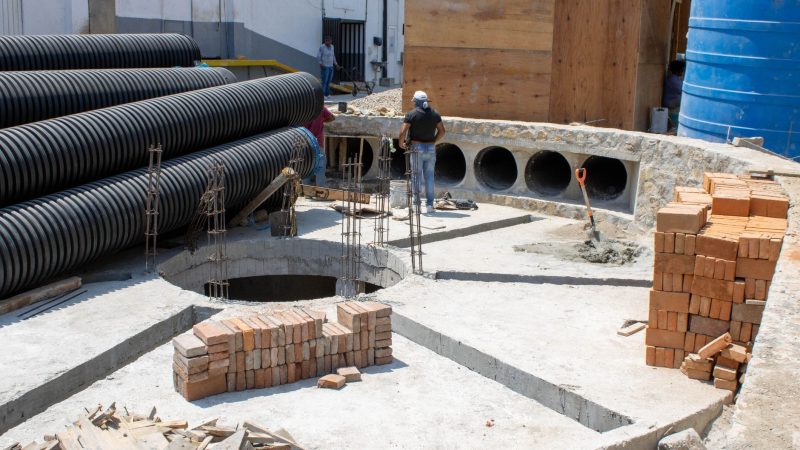
This is where budgets blow up. The tank installation cost bundles the platform, plumbing and labour, and on a first-time setup it can equal or exceed the tank price itself.
Platform or stand
A tank must sit dead level on a full-contact base, or it stresses and cracks over time. Options range from a simple iron stand to a built-up brick or concrete platform:
- MS iron stand: roughly ₹2,000, ₹6,000 depending on height and tank size.
- Brick/masonry platform: roughly ₹3,000, ₹9,000 including mason labour.
- RCC slab or raised structure: ₹10,000 and up if you need real height for pressure.
Plumbing and fittings
Every tank needs an inlet, an outlet, an overflow and a drain, plus the connecting pipe runs to your existing lines. Fittings, tank connectors, ball valves, elbows, unions and a foot valve if pumping, add up quietly. Budget roughly ₹1,500, ₹6,000 for a straightforward job, more if pipe runs are long or you’re upgrading old lines. The pipe material matters here too; see our ranking of the best pipe materials for home plumbing before you let a plumber default to the cheapest option.
Pump (if you’re lifting water)
If water has to travel from a ground sump or borewell up to a rooftop tank, you need a pump. A basic 0.5-1 HP self-priming or monoblock pump runs roughly ₹3,500, ₹9,000; borewell submersibles cost far more. If a pump is already in place, this line is zero, but don’t assume it is.
Tip: Ask for the platform and plumbing as separate line items on your quote. When I rebuilt my platform, one contractor’s “all-in” figure hid ₹4,000 of masonry that a second contractor listed openly, the itemised quote was actually cheaper once I compared like for like.
A realistic total: adding it all up

Let’s put a full 1,000-litre rooftop setup together so you can see the shape of a real bill. Assume a triple-layer poly tank, a brick platform, standard plumbing and a small pump already installed:
| Line item | Typical range (₹) |
|---|---|
| 1,000 L triple-layer poly tank | 6,000-12,000 |
| Platform (brick/masonry) | 3,000-9,000 |
| Plumbing, valves and fittings | 1,500-6,000 |
| Labour (plumber + helper, half day) | 1,000-3,000 |
| Transport and incidentals | 300-1,500 |
| Total installed (pump already present) | ~11,800-31,500 |
The spread is wide because it depends on your city, whether pipes already run to the roof, and how much masonry you need. But the lesson holds: the tank was ₹6,000, ₹12,000, yet the job landed near ₹12,000, ₹31,000. Plan for the whole thing.
Cost per litre storage: the number that actually guides your choice
The cleanest way to compare tank options is cost per litre storage, total tank price divided by capacity. It strips away the confusion and shows you where value really sits. Bigger tanks almost always win on this measure because the fixed costs (moulding, fittings, delivery) spread across more litres.
| Poly tank size | Sample price | Cost per litre |
|---|---|---|
| 500 L | ₹5,000 | ₹10.0/L |
| 1,000 L | ₹8,500 | ₹8.5/L |
| 2,000 L | ₹15,000 | ₹7.5/L |
| 5,000 L | ₹34,000 | ₹6.8/L |
Here’s how to use this number sensibly:
- Work out your genuine daily need (roughly 135-150 litres per person per day is a common planning figure).
- Decide how many days of buffer you want for supply cuts.
- Multiply to get a target capacity, then round up to the next standard tank size.
- Compare the cost per litre of that size against the size just below and just above.
- Pick the size where the per-litre cost stops dropping meaningfully, that’s your sweet spot.
Do not chase the lowest cost per litre blindly, though. A 5,000L tank is only cheaper per litre if you’ll actually cycle that water. Stored water that sits for weeks can grow stale and needs periodic cleaning, always confirm your drinking water is safe with a certified lab, especially if it stands a long time.
Is a bigger tank worth the extra cost?
Usually yes, up to the point where you’d be storing more than you use in a reasonable cycle. A bigger tank costs less per litre, buys you more buffer against supply cuts, and often saves you the future cost and disruption of a second tank. But there are real limits:
- Weight: a full 2,000L tank weighs two tonnes, your roof and platform must take it. Check with a structural engineer if unsure.
- Turnover: water you don’t use within days goes stale and wastes cleaning effort.
- Pump duty: a much bigger tank may need a stronger pump, adding cost.
In my experience, most 3-4 person households land happily on a 1,000L rooftop tank paired with a larger ground sump, rather than one giant overhead tank straining the roof. That split keeps the heavy storage low down and the pressure-giving storage up top.
How to keep your total cost sensible
A few habits have saved me money over the years without cutting corners on safety or quality:
- Get at least two itemised quotes and compare line by line, not just totals.
- Buy the tank yourself from a dealer rather than through the plumber’s markup.
- Don’t skimp on the foot valve, ball valves and tank connectors, cheap fittings are the first to leak.
- Size the platform right the first time; rebuilding one later costs more than doing it well now.
- Buy a slightly larger tank than today’s need if your family or supply situation may change.
For the full picture on materials, sizing, distribution and long-term maintenance, our complete home guide to water storage tanks and distribution ties all of these threads together. Standards bodies like the Bureau of Indian Standards and groundwater guidance from the Central Ground Water Board are useful references when you want to go deeper on quality and sourcing.
Frequently Asked Questions
How much does a water storage tank cost?
A common 1,000-litre triple-layer poly tank costs roughly ₹6,000, ₹12,000 for the tank alone. Once you add a platform, plumbing, fittings and labour, a fully installed job typically lands around ₹12,000, ₹31,000. Steel and concrete tanks cost considerably more upfront but last longer.
What adds to tank installation costs?
The main add-ons are the platform or stand, all the plumbing (inlet, outlet, overflow, drain and connecting pipes), quality fittings and valves, a pump if you’re lifting water, plus plumber and mason labour and transport. On a first-time setup these often equal or exceed the tank’s own price.
Is a bigger tank worth the extra cost?
Often yes, because cost per litre falls as capacity rises and you gain more buffer against supply cuts. But only up to the point where you’ll actually cycle the water. Beyond that you risk stale water, extra cleaning, a heavier roof load and a bigger pump requirement.
What is a good cost per litre for storage?
For poly tanks, roughly ₹7, ₹10 per litre is typical, dropping toward the lower end as tanks get bigger. Use it to compare sizes: pick the capacity where the per-litre cost stops falling meaningfully. Don’t chase the absolute lowest figure if you can’t use that much water regularly.
Should I buy the tank myself or let the plumber supply it?
Buying the tank yourself from a dealer usually saves the plumber’s markup, and you get to choose the brand and layer count. Let the plumber handle fittings and labour, but keep those on a separate itemised line so you can compare quotes fairly and avoid hidden charges.
So, where does that leave you?
The tank’s sticker price is just the opening bid. Budget for the platform, plumbing, pump and labour, then use cost per litre to pick a size that gives real value without over-storing water you can’t cycle. Get itemised quotes, don’t skimp on fittings, and size the platform right the first time, those three moves save the most money and hassle.
When you’re ready to plan the whole system rather than just one tank, dip into our complete guide to home water storage and distribution. It’ll help you connect the dots between capacity, materials and the pipes that carry water where you need it.