For twelve years I trusted my borewell water because it looked clear, smelled fine, and nobody at home fell sick. Then a new geyser started scaling up in under a year, and I finally decided to stop guessing. I ran the exact same tap water through three different methods on the same afternoon: a pack of paper test strips, a handheld TDS meter, and a proper certified lab. I’m Arjun, and after 15 years babysitting my own borewell, pump, and overhead tank, I expected the results to roughly agree. They didn’t, and the gaps were the whole lesson.
This is the honest write-up of testing my borewell water results side by side: what each tool got right, where the cheap ones quietly lied, and what I’d tell my past self before spending a rupee. You’ll get my actual numbers, a straight comparison table, and a simple order to test in so you don’t repeat my mistakes. If you want the wider picture first, start with our complete guide to water testing and quality.
Key Takeaways
- My TDS meter and the lab agreed closely on total dissolved solids, within about 40 ppm of each other (meter read 610 ppm, lab read 648 mg/L).
- Test strips were useful for a quick yes/no on hardness and pH, but their colour bands were too coarse to trust for real numbers.
- Only the lab caught what actually mattered: high hardness, borderline nitrate, and iron I couldn’t taste or see.
- A TDS meter tells you how much is dissolved, never what, it cannot flag bacteria, nitrate, arsenic, or fluoride.
- Total cost of all three methods was roughly ₹1,500, and the ₹900 lab test was the only one worth repeating yearly.
Why I finally tested instead of assuming
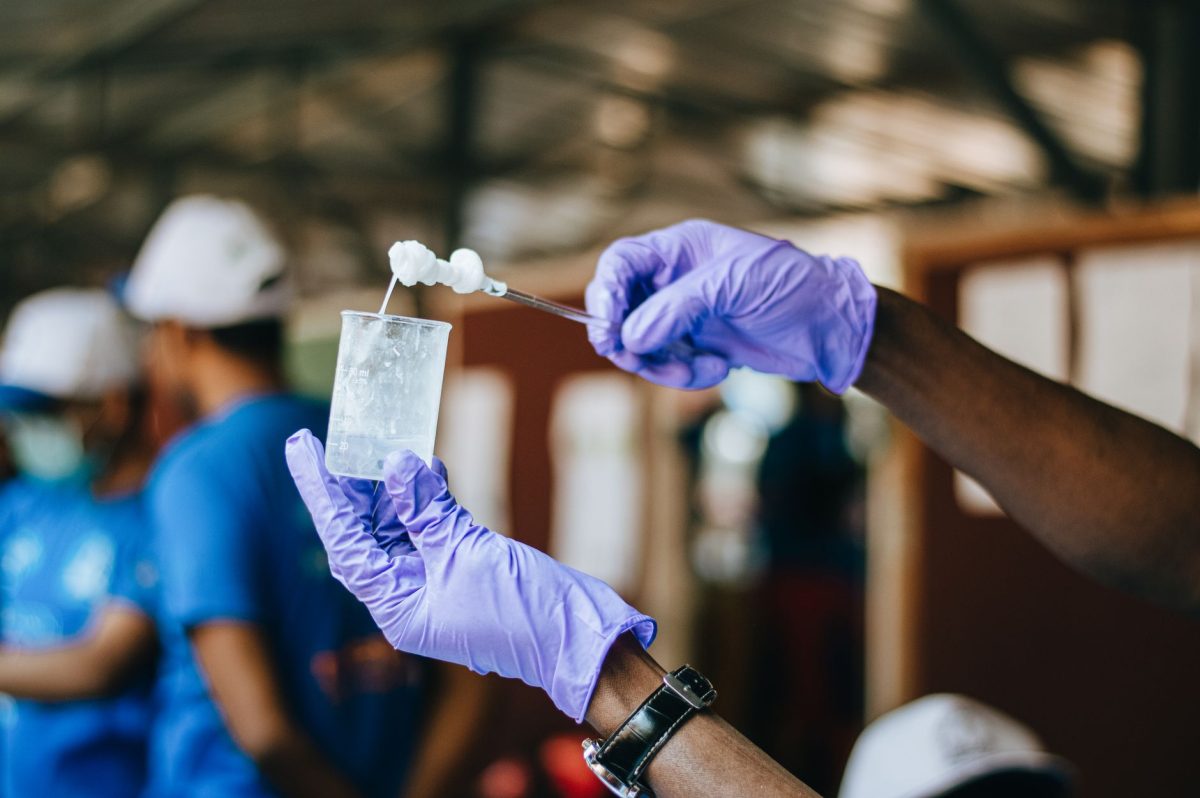
Clear water is the most convincing liar in the house. Mine poured out looking like bottled mineral water, so for years I assumed it was fine. The warning signs were subtle and slow: chalky white residue on the taps, soap that never lathered, and a brand-new geyser element crusted with scale far too early.
None of those tell you a number. They just tell you something is dissolved in there. I wanted to know what and how much, and whether the ₹300 gadgets on the internet could answer that as well as a lab. So I set up my little kitchen-table experiment and treated my own tap like a science project.
The three methods I used
1. Paper test strips (~₹300 a pack)
These are the plastic strips with coloured pads you dip in a glass of water and read against a chart. My pack claimed to check hardness, pH, chlorine, nitrate, nitrite, and a couple of others. Dip for two seconds, wait 60, match the colour. Cheap, instant, and honestly a bit fun.
2. A handheld TDS meter (~₹350)
A pen-shaped device you dip into a cup; it reads total dissolved solids in ppm. This measures how well the water conducts electricity and converts that into a single number. It’s the tool most people online swear by, so I wanted to see how my TDS meter’s accuracy held up against the lab.
3. A certified lab test (~₹900)
I collected a sample in the sterile bottle the lab gave me, following their instructions to the letter, and dropped it off the same morning. They ran a standard drinking-water panel, TDS, pH, total hardness, iron, nitrate, fluoride, and a bacterial (coliform) check. This was the slow, boring, expensive option, and it turned out to be the only one that mattered.
My actual results, side by side
Here’s the head-to-head. I’ve kept my real figures and rounded gently; treat these as one borewell’s story, not a rulebook for yours.
| What I measured | Test strip | TDS meter | Certified lab |
|---|---|---|---|
| Total dissolved solids (TDS) | Not measured | 610 ppm | 648 mg/L |
| Total hardness | “Very hard” band (top of chart) | Not measured | 385 mg/L as CaCO₃ |
| pH | ~7.5 (colour looked between bands) | Not measured | 7.6 |
| Nitrate | “Low / safe” pad | Not measured | 38 mg/L (borderline) |
| Iron | Not on my strip | Not measured | 0.6 mg/L (slightly high) |
| Bacteria (coliform) | Cannot detect | Cannot detect | Not detected |
What matched, and what surprised me
The TDS meter genuinely impressed me
This was the happy surprise. My ₹350 pen read 610 ppm; the lab came back at 648 mg/L. For a hobby-grade device that’s a very close call, and it lines up with what I’ve seen comparing a good handheld TDS meter against lab numbers, decent meters land within roughly 10% when you calibrate them and the water isn’t unusual.
But here’s the catch I had to keep reminding myself of: being close on TDS proves nothing about safety. That single number is the total of everything conductive dissolved in the water. It cannot separate harmless calcium from harmful nitrate, and it is completely blind to bacteria, which carry no charge to detect. A well can read a “clean” 150 ppm and still make you sick.
The strips were right in spirit, vague in detail
The hardness pad slammed straight to the darkest “very hard” band, and the lab confirmed it at 385 mg/L, hard water, no argument. So the strip’s headline was correct. The problem is the resolution: “very hard” could mean 300 or 500, and those call for different softening decisions. Good enough to raise a flag, not good enough to plan around.
The real letdown was nitrate. My strip’s nitrate pad read comfortably “low and safe.” The lab measured 38 mg/L, right on the edge of the 45 mg/L drinking limit set under Indian standards. If I’d trusted the strip, I’d have shrugged off a number I actually need to watch, especially with a young nephew visiting. That single mismatch is why I no longer rely on strips for anything I care about.
The lab found what I couldn’t see, smell, or taste
The iron result, 0.6 mg/L, a touch above the 0.3 mg/L limit where staining and metallic taste creep in, explained the faint rusty tinge I’d been blaming on old fittings. Neither the strip nor the meter had any way to catch it. And the coliform “not detected” line gave me something no gadget on earth could: confidence the water was microbiologically safe that day.
Tip from my kitchen table: Calibrate your TDS meter with the little sachet of standard solution before you trust it, and always test at the same tap after letting water run for 30 seconds. My first-ever reading was 90 ppm too high simply because I measured the stale water sitting in the pipe overnight.
How to run your own three-way test
If you want to repeat what I did, here’s the order that saves money and confusion. Do it on a day you’re home, and keep a notepad.
- Let the tap run about 30 seconds to clear standing pipe water, then fill a clean glass and a lab-supplied bottle from the same flow.
- Dip the test strips first, since they’re time-sensitive, read the colours at exactly the second the instructions say, in daylight, not under yellow bulbs.
- Rinse and calibrate your TDS meter, then dip it into the glass and note the ppm once the number settles.
- Cap the lab bottle without touching the inside, keep it cool, and hand it in the same day, never the next morning.
- Write every reading down immediately, then compare the strip and meter against the lab report when it arrives.
For choosing between a quick strip check and a full lab panel in the first place, this breakdown of test strips versus certified lab testing maps out exactly when each one earns its keep. And if you’re still assembling your kit, the roundup of the best home water test kits for borewell owners saved me from buying the wrong pack twice.
What I’d do differently now
Three cheap lessons came out of my ₹1,500 afternoon, and I’d hand them to any borewell owner for free.
- Lead with the lab, not the gadget. I did it backwards, played with strips for weeks before booking a lab. The lab should be the anchor; the meter is just for keeping an eye on trends between labs.
- Keep the TDS meter for monitoring, not diagnosis. It’s brilliant for spotting a sudden jump that means “something changed, test properly”, and useless for deciding if water is safe.
- Retest after the monsoon. Groundwater shifts with the rains. My borewell’s nitrate is exactly the sort of thing that can drift, so I now book a lab test once a year, right after the rains settle.
None of this replaces professional judgement. If a health question is on the table, nitrate near the limit, any bacteria, arsenic or fluoride in your region, confirm with a certified lab and, where it concerns drinking-water safety, a qualified professional. India’s Bureau of Indian Standards publishes the drinking-water limits (IS 10500) worth checking your report against, and the Central Ground Water Board is a useful reference for regional groundwater quality.
Frequently Asked Questions
Do home test kits match lab results?
Partly. My TDS meter landed within about 40 ppm of the lab, which is genuinely close. But test strips only matched on broad “hard/soft” flags and got nitrate badly wrong. Home kits are fine for quick screening and trends; they don’t replace a certified lab for anything affecting health.
How accurate was my TDS meter?
Surprisingly accurate on the number it exists to measure, 610 ppm versus the lab’s 648 mg/L, roughly a 6% gap. That said, “accurate TDS” only means it correctly totalled the dissolved solids. It said nothing about which solids they were, and couldn’t detect the borderline nitrate or the slightly high iron.
What surprised you most about your water test?
The nitrate. My strip called it “low and safe,” but the lab measured 38 mg/L, sitting right below the 45 mg/L limit. Clear, good-tasting water can hide a number you genuinely need to track, that single gap changed how I think about testing forever.
Can a TDS meter tell me if my water is safe to drink?
No. A TDS meter measures how much is dissolved, never what. It cannot detect bacteria, nitrate, arsenic, fluoride, or pesticides, some of the most important safety concerns. Low TDS water can still be unsafe, and high-TDS water can be perfectly harmless mineral content. Only a lab tells you the difference.
How often should I lab-test borewell water?
At least once a year for most homes, ideally after the monsoon when groundwater quality shifts. Test sooner if the taste, smell, or colour changes suddenly, if a family member’s health is a concern, or if a nearby well or your region is known for nitrate, iron, or fluoride issues.
The practical upshot
Testing my borewell water three ways taught me the cheap tools aren’t useless, they’re just narrow. The TDS meter is a fine watchdog, the strips are a rough first glance, and the lab is the only one that actually knows your water. If you own a borewell, run all three once, then keep the meter for monitoring and the lab for the truth. When you’re ready to go deeper, our complete homeowner’s guide to water testing and quality walks through every parameter on that lab report and what to do about each one.