When I built my first home, I put the whole water budget into one big rooftop tank and thought I was done. Two summers later, with a weak monsoon and a dropping borewell, I was refilling that tank by tanker at 6 a.m. and wishing I had a cool underground reserve to fall back on. The overhead vs underground water tank choice is not really about which is “better”, it is about which one matches your water supply, your pressure needs, and your budget.
I have run both kinds side by side on my own borewell setup for over a decade. In this guide I will walk you through pressure, cost, cleaning, water temperature and space, so you can settle the rooftop-versus-sump debate for your own home with confidence. If you want the wider picture first, start with our complete guide to storage tanks and distribution.
Key Takeaways
- Overhead tanks give free gravity pressure and simpler plumbing; underground sumps store more water in less visible space and stay cooler.
- An underground tank almost always needs a pump to lift water to your taps, an overhead tank often does not.
- Underground sumps typically hold far more (a 5,000-20,000 litre concrete sump is common) than a rooftop tank (usually 500-2,000 litres).
- For unreliable supply, the best setup is often both: a sump to store bulk water and an overhead tank for pressure.
- Budget roughly ₹8, ₹25 per litre for a plastic overhead tank versus ₹15, ₹40 per litre for a built concrete sump, before pump and plumbing.
The core difference: gravity vs storage

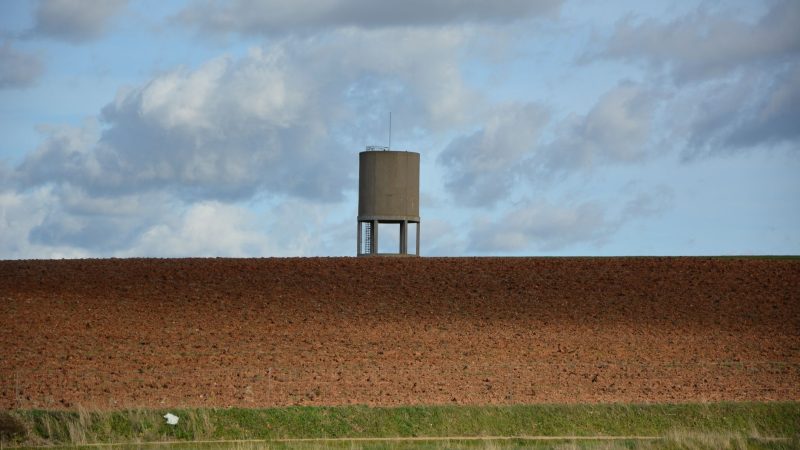
An overhead tank sits high, on the roof or a raised stand, so gravity pushes water down to your taps for free. A well-placed rooftop tank can run your whole house without any electricity, which is a real blessing during power cuts.
An underground sump tank sits at or below ground level. It is your bulk reserve, the place municipal water or your borewell fills first. Because it is low, you need a pump to move that water up to an overhead tank or directly to the house. Think of the sump as the warehouse and the overhead tank as the delivery counter.
That single distinction, one gives you free pressure, the other gives you cheap bulk storage, drives almost every trade-off below.
Overhead vs underground water tank: side-by-side comparison
Here is how the two options stack up on the factors that actually matter day to day. I have based the ranges on my own installs and on quotes I have gathered over the years, treat them as ballpark, since prices swing by region and material.
| Factor | Overhead (rooftop) tank | Underground (sump) tank |
|---|---|---|
| Water pressure | Good, free (gravity), no pump needed for basic taps | None on its own, needs a pump to reach taps |
| Typical capacity | 500-2,000 L (roof load limits size) | 5,000-20,000 L or more |
| Rough cost (tank only) | ₹8, ₹25 per litre (plastic) | ₹15, ₹40 per litre (built concrete) |
| Water temperature | Warmer, sun heats the roof tank | Cooler and steadier underground |
| Cleaning access | Easy to reach, easy to drain and scrub | Harder, confined space, needs care |
| Visible space used | Uses roof space; visible | Hidden under driveway or yard |
| Power-cut resilience | Runs by gravity even with no power | Stops working the moment the pump is off |
| Contamination risk | Low if lid seals; algae if translucent | Higher, groundwater or sewage ingress if cracked |
Overhead tank pros and cons
The big win with a rooftop tank is free, reliable pressure. Even a modest one-storey drop gives enough head for showers, washing machines and taps. When the grid fails, you still have water, no small thing during a long outage.
- Pros: Gravity pressure, works in power cuts, cheap plastic options, dead-simple cleaning, easy to spot leaks.
- Cons: Limited size (roof can only bear so much), water gets warm in summer, exposed to sun and dust, and every litre must first be pumped up there.
Underground sump tank pros and cons
A sump shines when you need to store a lot of water, for tanker deliveries, patchy municipal supply, or a borewell that runs only a few hours a day. It hides underground, frees your roof, and keeps water noticeably cooler through the hot months.
- Pros: Large capacity, cooler water, invisible, no roof load worries, protected from sun and freezing.
- Cons: Needs a pump (and power) for every drop, higher build cost, harder to clean, and real contamination risk if the walls crack or the lid is poor.
Tip from my own setup: If your supply is unreliable, do not choose one, run both. My sump collects whatever the borewell and tanker give, and a small pump lifts it to a rooftop tank that feeds the house by gravity. During a power cut I still get water pressure, and I never run dry because the sump is my buffer. This dual arrangement is by far the most robust for Indian conditions.
Do underground tanks need a pump?
Almost always, yes. Because a sump sits low, water will not climb to your first-floor taps on its own. You need a pump to either push water directly into the house pipes (a pressure pump or booster) or lift it to an overhead tank that then feeds by gravity.
The one exception is if you only ever draw water at a tap that sits below the sump’s water line, rare in practice. For a normal home, plan for a pump. In my experience a decent 0.5-1 HP monoblock pump for lifting sump water to a rooftop tank runs roughly ₹4,000, ₹9,000, plus wiring and a starter. If you want it to switch on and off automatically, add a float switch or a controller. For choosing between tank materials before you build, our comparison of poly, concrete and steel tanks is worth a read.
Which tank keeps water cooler?

The underground sump wins comfortably here. Soil is a natural insulator, so a buried tank holds a steadier, cooler temperature, often several degrees below a sun-baked rooftop tank in peak summer. If you have ever showered from a black plastic roof tank at 3 p.m. in May, you know the water can come out almost hot.
You can soften the overhead tank’s heat problem: choose a light-coloured or triple-layer tank, add a simple shade or thatch cover, or insulate it. But it will never match the natural coolness of a proper underground sump. If cool water matters to you, and it does for many households in hot climates, that is a point for the sump.
How to choose the right setup for your home
Rather than picking a “winner”, match the tank to your situation. Walk through these steps in order:
- Check your supply reliability. Is water available all day, or only for a couple of hours? Patchy supply pushes you toward a large underground sump for bulk storage.
- Estimate daily need. A rough figure is 135 litres per person per day for full domestic use. Size at least one day’s storage, ideally two.
- Assess your roof. Can it safely carry a full tank? Water weighs 1 kg per litre, a 1,000 L tank is a tonne. If the roof is weak, keep the overhead tank small and lean on a sump.
- Decide on power-cut tolerance. If outages are frequent, an overhead tank guarantees pressure without electricity. A sump-only setup goes dead the instant power fails.
- Set your budget. Overhead-only is cheapest. Sump-only saves roof space but needs a good pump. The dual sump-plus-overhead setup costs the most but is the most reliable.
For most homes with unreliable supply, the honest answer is the combination. If you want to see exactly how I wired mine, I documented the whole thing in my dual sump-plus-overhead tank build. Still weighing tank styles overall? Our roundup of the best water tank types for homes ranks the common options.
Cleaning, safety and water quality
Whatever you choose, storage is only as safe as its upkeep. Overhead tanks are easy to clean, drain, scrub the walls, rinse, and refill, ideally twice a year. Keep the lid sealed to block dust, insects and birds, and avoid clear or translucent tanks that let light in and grow algae.
Underground sumps demand more care. A hairline crack can let in groundwater or, worse, seepage from a nearby drain or septic line. Inspect the walls and lid every year, seal any cracks promptly, and never let a sump lid sit loose at ground level where runoff can enter. Cleaning a sump means confined-space work, so ventilate it well and, for large tanks, get help rather than climbing in alone.
Because underground storage carries a higher contamination risk, I always tell people to test their stored water if they suspect ingress or notice a change in taste, colour or smell. Do not rely on guesswork for drinking water, send a sample to a certified lab and follow the drinking-water limits published by the Bureau of Indian Standards. For general private-water guidance, the World Health Organization is a solid, non-commercial reference.
Frequently Asked Questions
Is an overhead or underground tank better?
Neither is universally better. An overhead tank gives free gravity pressure and works in power cuts, while an underground sump stores far more water and keeps it cooler. If your supply is unreliable, the strongest choice is usually both, a sump for storage and an overhead tank for pressure.
Do underground tanks need a pump?
Yes, in nearly all cases. Because a sump sits at or below ground level, water cannot reach your taps by gravity. A pump either pushes it directly into the house pipes or lifts it to an overhead tank. Only rare setups drawing water below the sump line avoid needing one.
Which tank keeps water cooler?
The underground sump keeps water noticeably cooler. Surrounding soil insulates it and shields it from direct sun, so temperatures stay steady even in peak summer. A rooftop tank, by contrast, can heat up sharply on hot afternoons unless you shade, insulate, or use a light-coloured tank.
How much water storage does a home need?
A common planning figure is around 135 litres per person per day for full domestic use. For a family of four, that is roughly 540 litres daily. Aim to store at least one full day, and ideally two, so a supply interruption or power cut never leaves you dry.
Can I use only an underground tank without an overhead one?
You can, but you will depend entirely on a pressure pump for every tap, which means no water during power cuts unless you have a backup. Many homes prefer pairing the sump with a small overhead tank so gravity keeps water flowing even when the electricity is out.
The practical upshot
The overhead-versus-underground question really comes down to what your home needs most: free pressure and power-cut resilience point to a rooftop tank, while bulk storage and cooler water point to an underground sump. For most households juggling patchy supply, the smartest answer is to combine them, let the sump store and the overhead tank deliver. Take stock of your supply, your roof, and your budget, then build the setup that fits.
Ready to plan the whole system? Browse our complete home guide to water storage tanks and distribution for sizing, materials, pumps and maintenance, all in one place.