My neighbour spent a week convinced his new borewell needed a repair, when the real problem was that he’d bolted a jet pump onto a 200-foot bore it could never lift from. The pump ran, the tank stayed empty, and nobody had told him that the submersible vs jet pump choice is decided almost entirely by how deep your water sits. I’ve been managing my own borewell, pump, and overhead-tank setup for 15+ years, and I’ve installed, cursed at, and replaced both types. This guide walks you through exactly which one fits your well, your depth, and your budget, so you don’t repeat that week.
Below you’ll get a plain comparison table, real cost and repair ranges, and a short checklist to match a pump to your setup. If you want the wider picture first, start with our complete guide to home water pumps and pressure systems.
Key Takeaways
- Depth decides it. A jet pump realistically lifts water from about 6-7 metres (20-25 ft) with a shallow-well setup, or up to roughly 25 m (80 ft) with a deep-well jet kit. Below that, you need a submersible.
- Submersibles sit in the water and push; jet pumps sit up top and pull. Pushing is far more efficient at depth, which is why almost every deep borewell in India runs a submersible.
- Jet pumps are cheaper to buy and dead-easy to service because everything is above ground and within arm’s reach.
- Submersibles usually last longer (often 8-15 years) and run quieter, but a repair means pulling the whole pump up the bore.
- For most open wells and shallow sumps, a jet or surface pump is plenty; for deep borewells, a submersible is the only sensible answer.
The core difference: push vs pull
Everything about this comparison flows from one idea. A submersible pump is a sealed motor-and-pump unit that hangs down inside the well, fully underwater, and pushes water up the pipe. A jet pump (a type of surface pump) sits at ground level and pulls water up using suction, helped by a jet assembly that recirculates a little water to boost lift.
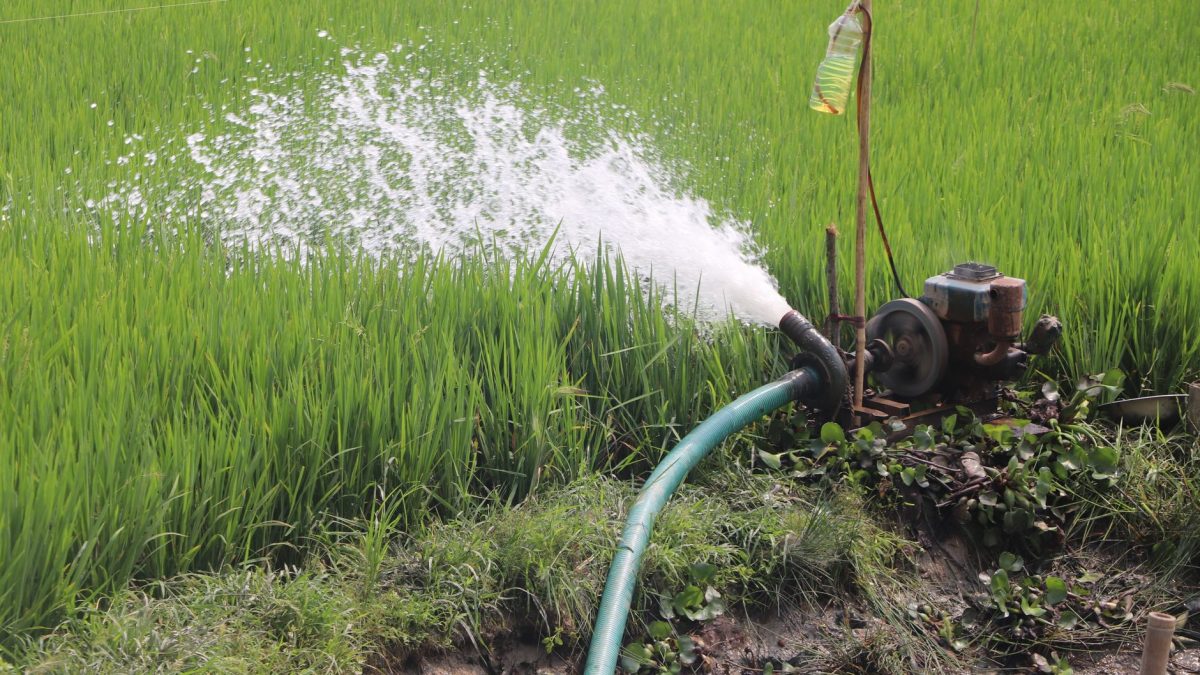
Pulling water has a hard physical limit. Because a suction pump relies on atmospheric pressure to push water up into it, no surface pump can lift water more than about 8 metres in theory, and 6-7 metres in the real world once you account for pipe friction and altitude. That single fact is why deep wells almost always go submersible.
Shallow-well vs deep-well jet pumps
People get confused here, so let’s clear it up. A shallow-well jet pump keeps its jet assembly inside the pump body and handles wells down to about 6-7 m. A deep-well (or convertible) jet pump drops the jet assembly down into the well on a second pipe, letting it reach roughly 20-25 m (65-80 ft). It’s still a surface pump, so it’s still limited, just cleverer about it.
Submersible vs jet pump: side-by-side comparison
Here is the surface vs submersible pump comparison most people actually want, laid out so you can scan it. Treat the costs as ballpark ranges for common 0.5-1.5 HP domestic units in India; branded, higher-flow, or stainless models sit at the top of each range or above.
| Factor | Submersible pump | Jet / surface pump |
|---|---|---|
| Where it sits | Deep inside the well, underwater | Above ground, near the well or in a pump room |
| Practical depth | Excellent, hundreds of feet (limited by the pump’s rating, not physics) | ~6-7 m shallow; up to ~25 m with a deep-well jet kit |
| Typical price (0.5-1.5 HP) | ₹6,000, ₹25,000+ | ₹3,500, ₹12,000 |
| Installation cost | Higher, needs pipe, cable, safety rope, sometimes a rig | Lower, mostly DIY-friendly at ground level |
| Noise | Very quiet (water muffles the motor) | Noticeably louder, especially deep-well jets |
| Priming | Never needs priming | Must be primed; can lose prime and run dry |
| Repair access | Must pull the whole unit up the bore | Everything is at arm’s reach |
| Typical lifespan | ~8-15 years | ~5-10 years |
| Best for | Deep borewells, high-rise tanks, low-noise needs | Open wells, shallow bores, sumps, tight budgets |
Which pump for a deep well?
If your static water level is more than about 7-8 metres below the pump, the deep well pump comparison is basically over: a submersible wins. My own borewell draws from well past that depth, and I’ve never seen a jet pump keep an overhead tank filled on a bore like mine without gasping and losing prime.
A deep-well jet pump can technically reach 20-25 m, but by the time you buy the extra pipe, foot valve, and jet assembly, you’re often close to submersible money, with a noisier, less efficient result. For a genuine deep bore, spend once and go submersible.
Tip from my own bore: Measure your static water level (where the water actually sits when the pump is off), not just how deep the bore was drilled. My bore is drilled deep, but the water rests much higher. Match the pump to the water level, not the drill depth, or you’ll oversize and waste money.
When a jet or surface pump is the smarter buy
Submersibles get all the glory, but a jet pump is often the right call, and I run surface pumps happily on my shallow sump. A jet pump makes sense when:
- Your water source is an open well, shallow bore, or ground-level sump/tank within suction reach.
- You want cheap, fast repairs, a leaking seal or failed capacitor is a 30-minute fix at ground level.
- You’re on a tight budget and the depth genuinely allows it.
- You need to move water between tanks or boost pressure in a small home.
The one habit a jet pump demands is keeping it primed. When I replaced a worn foot valve on my surface pump, the pump had been losing prime overnight and running dry each morning, a five-minute part saved the motor. If you’re weighing specific models for your setup, our roundup of the best water pumps for home use by setup pairs pump types to real household situations.
Which pump lasts longer, and what it costs to run

Submersibles generally last longer because they run cooler (surrounded by water) and don’t suffer prime loss or dry-running as easily. A well-installed submersible on clean water often runs 8-15 years; a jet pump typically lands in the 5-10 year range, partly because dry-running and cavitation take a toll.
But “lasts longer” hides a catch: when a submersible does fail, you pay to pull it up the bore, often ₹1,500, ₹4,000 in labour before any parts. A jet pump repair is usually a fraction of that because nothing has to come out of the ground. Efficiency matters too, pushing beats pulling, so a submersible generally moves more water per unit of electricity at depth. For the full electricity picture, see what a pump actually costs to run each month.
How to choose the right pump for your well
Work through these steps in order and the answer usually falls out on its own:
- Find your static water level. Drop a weighted string down the bore/well when the pump is off, or ask your driller’s log. Note how far below the surface the water sits.
- Add your delivery height. Include the lift up to your overhead tank and any distance to fixtures.
- Apply the depth rule. Water sitting deeper than ~7 m below the pump → submersible. Within suction reach → jet or surface pump is fine.
- Size the HP to your flow and head, not to “bigger is better.” Oversizing wastes power and money.
- Weigh repair access vs longevity. Frequent, cheap fixes (jet) vs longer life but costlier extractions (submersible).
- Check your voltage and water quality. Sandy or gritty water wears any pump faster; a good foot valve or sand separator helps.
Safety note: Both pumps run on mains power near water. Always use a properly earthed connection and, ideally, an ELCB/RCCB. If you’re drinking this water, get it tested by a certified lab, a pump choice doesn’t make water safe, and I’d never guarantee that for you from a blog post.
For depth and safe-yield questions in the Indian context, the Central Ground Water Board is a solid reference, and for drinking-water safety guidance the World Health Organization keeps plain-language resources.
Frequently Asked Questions
Is a submersible pump better than a jet pump?
Neither is “better” outright, it depends on depth. For deep borewells, a submersible is clearly better: quieter, more efficient, and no priming. For shallow open wells or sumps, a jet pump is cheaper, easier to repair, and completely adequate. Match the pump to your water level.
How deep can a jet pump lift water?
A shallow-well jet pump lifts from about 6-7 metres (20-25 ft), the real-world suction limit. A deep-well or convertible jet pump, with its jet assembly lowered into the well, can reach roughly 20-25 m (65-80 ft). Beyond that, you need a submersible pump.
Which pump lasts longer?
Submersibles usually last longer, often 8-15 years, because water keeps the motor cool and they don’t lose prime or run dry as easily. Jet pumps typically last 5-10 years. The trade-off is repair cost: fixing a submersible means pulling it out of the bore, which adds labour.
Can I replace a jet pump with a submersible?
Yes, if your well casing accepts a submersible and depth justifies it. You’ll need suitable pipe, waterproof cable, and a safety rope, plus a control box for some models. It’s a bigger install than a surface pump, so budget for extra parts and, often, professional help.
Why does my jet pump keep losing prime?
The usual culprit is a leaking foot valve or a small air leak on the suction line, letting water drain back when the pump stops. Check the foot valve, tighten fittings, and confirm the suction pipe is airtight. Chronic prime loss can lead to dry-running, which damages the motor.
Is a submersible pump noisier than a jet pump?
No, it’s the opposite. A submersible runs underwater, which muffles almost all the sound, so you barely hear it. Jet and surface pumps sit in the open and are noticeably louder, with deep-well jets among the noisiest. If quiet operation matters, submersibles win easily.
The practical upshot
Let depth make the call. If your water sits deeper than roughly 7 metres, buy a submersible and enjoy the quiet, efficient, long-running result. If it’s shallow, an open well, a low bore, or a ground-level tank, a jet or surface pump is cheaper, simpler, and easier to fix when it hiccups. Everything else (noise, cost, repairs) is secondary to that one measurement, so take five minutes to find your static water level before you spend a rupee.
Still deciding on your whole setup? Browse our full home water pumps and pressure systems guide or the rest of the Pumps & Pressure Systems section, no pressure, just the notes I wish I’d had when I started.