One evening my kitchen tap gave a strange stutter, and then I heard it: a rapid click… click… click from the pump room, on and off every few seconds. That machine-gun clicking is called short-cycling, and it is one of the fastest ways to burn out a perfectly good pump and pressure switch. I have run my own borewell, pump, and overhead-tank setup for 15 years, and I have chased this exact fault twice. In this hands-on case study I will walk you through fixing a short-cycling pump the way I actually did it, what I heard, what I checked in order, what I found, and the simple recharge that finally restored steady pressure.
If your pump is turning on and off far too quickly, you are in the right place. Nothing here needs a technician for the first hour of diagnosis, just your ears, a pressure gauge, and a bit of patience.
Key Takeaways
- Short-cycling almost always means the pressure tank has lost its cushion of air, a “waterlogged” tank is the number-one cause.
- A healthy pressure tank should have an air pre-charge about 2 psi below your pump’s cut-in pressure (commonly 26-28 psi for a 30/50 switch).
- You can diagnose most of this with just your ears, a tyre gauge, and a bicycle or foot pump, no technician needed at first.
- Ignoring rapid cycling can kill a pump or pressure switch in weeks; a 10-minute recharge often fixes it for months.
- If recharging does not hold, suspect a ruptured tank bladder or a faulty pressure switch next.
What short-cycling actually is (and why it wrecks pumps)
A normal pressure system runs like this: you open a tap, pressure drops, the pump kicks in at its “cut-in” pressure, runs until it hits the higher “cut-out” pressure, then shuts off. The pressure tank holds a reserve so small draws, a hand wash, a filling glass, come straight from the tank without waking the pump at all.
When a pump short-cycles, that reserve is gone. The pump reaches cut-out, shuts off, pressure collapses almost instantly, and it fires again, sometimes several times a minute even when nobody is using water. Every start pulls a big surge of current and heat through the motor. That is why pump clicking on and off is not just annoying; it is genuinely destructive.
Short-cycling is one of the classic errors I cover in my roundup of common water pump mistakes that quietly cost you money, because most people mistake it for a “weak motor” and rush to replace the whole pump, when the real culprit is a ₹0 pocket of missing air.
What causes a pump to short-cycle
- Waterlogged pressure tank (most common): the air cushion has escaped or the bladder failed, so the tank now holds almost no reserve.
- Wrong air pre-charge: even a working tank cycles fast if its air pressure drifted too far from the pump’s cut-in setting.
- Faulty or misadjusted pressure switch: a narrow gap between cut-in and cut-out makes the pump toggle constantly.
- Clogged pipe, closed valve, or blocked foot valve: restricted flow can make pressure spike and drop unnaturally fast.
- Oversized pump on a small tank: the pump fills the tiny reserve in seconds and shuts off, over and over.
My case study: diagnosing it step by step
Here is exactly what I did the night my pump started stuttering. I worked from cheapest and safest to most involved, so you can stop as soon as you find the fault. Follow these in order, for me, the answer showed up at step 3.
- I listened and counted. With every tap in the house closed, I timed the cycling. Mine clicked on roughly every 4-5 seconds. A pump that fires with no water running is your first hard proof of a tank problem, not a plumbing leak.
- I watched the pressure gauge. I opened one tap and watched the needle. It swung wildly, jumping from cut-out to cut-in in a second or two, with no slow, smooth drop in between. That fast swing screams “no reserve in the tank.”
- I tapped the tank. I knocked with a knuckle from top to bottom. A healthy tank rings hollow near the top (air) and sounds dull near the bottom (water). Mine sounded dull almost all the way up, waterlogged.
- I cut the power and drained it. I switched off the pump at the mains, opened the nearest drain tap, and let the tank empty. This is essential before touching the air valve, never work on a pressurised tank.
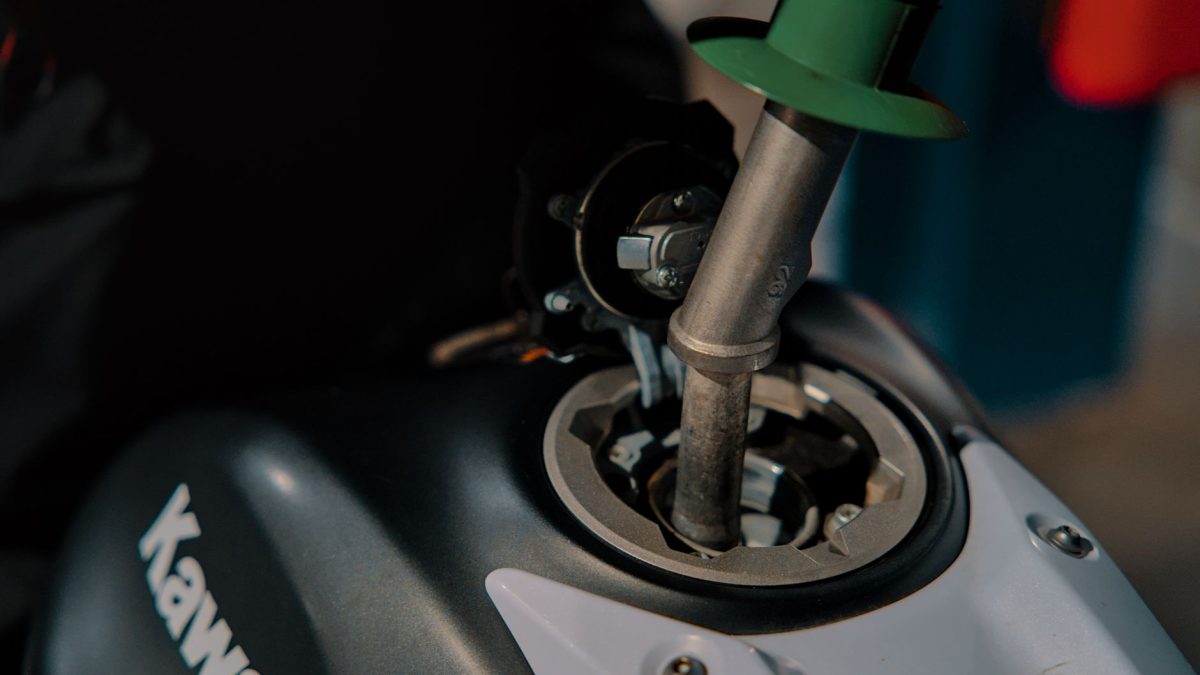
- I checked the air valve. On the top of the tank is a valve that looks exactly like a car tyre valve (a Schrader valve). I pressed the pin with the tank empty. Almost nothing came out, barely any air. That confirmed it.
Safety first: Always switch the pump off at the mains and drain the tank to zero pressure before you open the air valve or disconnect anything. A pressurised tank can spray water and, in rare cases, hurt you. Electricity and standing water do not mix, dry your hands and the switch area first.
Can a waterlogged tank cause short-cycling?
Yes, in my experience it is the cause about eight times out of ten. Inside a pressure tank, a cushion of compressed air (sometimes separated by a rubber bladder) does the actual pressure-holding. When that air leaks out or the bladder tears, water fills the space it used to occupy. The tank becomes “waterlogged,” the reserve vanishes, and the pump has nothing to lean on. Fixing a short-cycling pump usually starts and ends right here.
How I recharged the tank air pressure
Once I confirmed the tank was waterlogged, the fix was refreshingly simple. You need the tank fully drained and the power off, plus a tyre gauge and a bicycle, foot, or small 12V pump. Here is the exact sequence I used.
- Find your pump’s cut-in pressure. Read it off the pressure switch label, or note the low number of your switch setting. A common Indian setup is a 30/50 switch, cut-in 30 psi, cut-out 50 psi.
- Set your target air charge 2 psi below cut-in. For a 30/50 switch, that is 28 psi. This 2-psi gap is the golden rule, it lets the air do the work without fighting the pump.
- Drain the tank completely. With power off and a tap open, let every drop out. Any water left in will throw off your air reading.
- Check the current air pressure. Press a tyre gauge onto the Schrader valve. Mine read about 6 psi, far too low.
- Add air in short bursts. Pump a little, check, pump a little more. Sneak up on your target so you do not overshoot. I stopped at 28 psi.
- Cap the valve, restore power, and test. Close the drain, switch the pump on, and let it fill. Then open a tap and watch the gauge fall slowly and smoothly, that slow fall is the sound of a healthy reserve returning.
After I recharged mine to 28 psi, the frantic clicking stopped completely. The pump now ran for a proper stretch, shut off, and stayed off while I filled a bucket. That steady rhythm is exactly what you are aiming for.
Tip: On my own tank I now check the air pre-charge every monsoon and again before peak summer, when demand doubles. It takes five minutes and has saved me from two more short-cycling episodes. I fold it into my broader seasonal pump care routine for monsoon and summer so I never forget.
Diagnosis at a glance: symptom, likely cause, fix
If your symptoms differ from mine, use this table to point yourself in the right direction before you call anyone. It mirrors the order I actually troubleshoot in.
| What you notice | Most likely cause | First thing to try | Rough cost |
|---|---|---|---|
| Pump clicks on/off every few seconds with taps closed | Waterlogged pressure tank | Drain and recharge air to 2 psi below cut-in | ₹0 (DIY) |
| Gauge needle swings fast with no smooth drop | Lost air reserve or torn bladder | Check pre-charge; if it won’t hold, replace bladder/tank | ₹0, ₹4,000+ |
| Cycling only under a running tap | Narrow switch gap or wrong cut-in setting | Adjust or replace the pressure switch | ₹400, ₹1,200 |
| Weak flow plus cycling | Clogged pipe, valve, or foot valve | Inspect and clear the restriction | ₹0, ₹1,500 |
| Air recharge won’t hold for a day | Ruptured tank bladder or leaking valve | Replace the Schrader valve or the tank | ₹150, ₹5,000 |
When the recharge doesn’t stick
Sometimes you recharge the tank, it works for a day, then the clicking returns. That tells you the air is escaping, and there are only a few places it can go. Here is where I look next.
- A leaking Schrader valve: put a drop of soapy water on the valve after charging. Bubbles mean a slow leak, swapping the valve core is cheap and easy.
- A ruptured bladder: if water sprays out of the air valve when you press the pin, the internal bladder has torn. That means a bladder kit or a new tank.
- A tired pressure switch: if the contacts are pitted or the gap is set too tight, the pump toggles no matter how good the tank is. A new switch is inexpensive and a common culprit.
It is easy to be talked into replacing the entire pump when one of these ₹200, ₹1,000 parts is the actual fault. I have heard plenty of confident but wrong advice on this, I sort the good from the bad in my piece on water pump myths versus facts. And if your water also looks or smells off during all this, do not guess about safety: get it checked by a certified lab or a qualified professional rather than relying on a home judgement call.
For the full picture of how pumps, switches, and pressure tanks work together, I keep everything organised in our complete owner’s guide to home water pumps and pressure systems. It is the map I wish I had when I started.
If you want the underlying theory on how pressure tanks and wells are meant to behave, the U.S. EPA’s private wells resource is a solid, non-commercial reference, and India’s Central Ground Water Board is worth a look for groundwater and borewell context.
Frequently Asked Questions
What causes a pump to short-cycle?
The most common cause is a waterlogged pressure tank that has lost its air cushion, so there is no reserve to smooth demand. Other causes include a wrong air pre-charge, a faulty or too-tight pressure switch, a clogged pipe or valve, or an oversized pump paired with a small tank.
Can a waterlogged tank cause short-cycling?
Yes, it is the single most frequent cause. The air cushion inside the tank does the pressure-holding. When that air leaks out or the bladder tears, water fills the space, the reserve disappears, and the pump fires repeatedly because it has nothing to lean on between draws.
How do I recharge tank air pressure?
Switch off the pump, drain the tank fully, then use a tyre gauge and a bicycle or foot pump on the Schrader valve. Add air in short bursts until you reach about 2 psi below your pump’s cut-in pressure, cap the valve, restore power, and test for a slow, smooth pressure drop.
How often should I check my pressure tank’s air charge?
Once or twice a year is plenty for most homes. I check mine before the monsoon and again before peak summer, when water demand roughly doubles. A five-minute check catches a slow leak long before it grows into full short-cycling and stresses the motor.
Is short-cycling really that harmful to a pump?
Very. Each start pushes a heavy surge of current and heat through the motor, and constant cycling can wear out a pump or pressure switch in a matter of weeks. That is why I treat rapid clicking as an urgent fix, not a background annoyance to live with.
The practical upshot
When my pump started clicking on and off, the fault turned out to be the simplest thing imaginable: a pocket of missing air. Fixing a short-cycling pump usually follows the same path I took, listen, watch the gauge, tap the tank, then drain and recharge the air to 2 psi below cut-in. If that does not hold, the valve, bladder, or switch is next, and each is a modest repair rather than a whole new pump.
Take it one calm step at a time and you will very likely solve this yourself. If you want to understand how every part fits together, browse our complete guide to home water pumps and pressure systems whenever you are ready, no rush, just a friendly reference for the next time your pump acts up.