You open the kitchen tap for a glass of water, and it comes out in a strong burst. Then someone upstairs flushes the toilet or the washing machine kicks in, and your stream drops to a dribble. That maddening pressure swing is the single most common complaint I hear from homeowners, and it sits right at the heart of the constant pressure vs VFD pump debate. Over 15 years running my own borewell, pump, and overhead-tank setup, I’ve lived with fixed-speed pumps, added a pressure tank, and finally fitted a variable-speed controller, so I’ve felt the difference in my own showers. This guide walks you through fixed-speed, constant-pressure, and VFD systems in plain language, shows you a side-by-side comparison, and gives you a straight verdict on which one actually earns its price for a real home.
Key Takeaways
- Fixed-speed pumps are the cheapest and simplest, but pressure rises and falls as the pump cycles on and off.
- Constant-pressure and VFD systems slow the motor down instead of switching it off, holding steady pressure across changing demand.
- A retrofit VFD controller for a home submersible typically runs about ₹8,000, ₹25,000 on top of the pump, versus a few thousand rupees for a basic pressure switch and tank.
- VFD only pays back on efficiency where you run the pump long hours or at part-load; for short daily fills, the simpler setup usually wins.
- Whatever you choose, correct pipe sizing, a check valve, and dry-run protection matter more to reliability than the control type alone.
The three ways a home pump can be controlled
Before comparing costs, it helps to understand what these three systems actually do differently. All of them move water. The difference is how they respond when you turn a tap on and off.
Fixed-speed pumps (the traditional setup)
A fixed-speed pump runs at one speed only: full blast or off. It’s controlled either by a simple on/off switch you flip, by a float in your tank, or by a pressure switch that cuts the motor when pressure hits a high point and restarts it at a low point.
Because the motor only knows “on” or “off,” your pressure naturally swings between the cut-in and cut-out points. A pressure tank smooths this out a little by storing some pressurised water, but you’ll still feel the difference between one tap open and three taps open. This is the setup on most Indian borewell homes, and for good reason: it’s cheap, robust, and easy to fix.
Constant-pressure systems
A constant pressure well pump system uses a sensor and a controller to keep water leaving your pump at a set pressure no matter how many taps are open. When you open one tap, the pump eases off; when you open three, it speeds up. You get the same firm stream whether you’re rinsing a cup or running the shower while the garden sprinkler is on.
Here’s the part that trips people up: nearly every modern constant-pressure system achieves this using a variable-frequency drive under the hood. So “constant pressure” describes the goal (steady pressure at the tap), while “VFD” describes the method (electronically varying motor speed). They overlap heavily, which is why the labels get used interchangeably in shops.
VFD pump systems
A VFD, or variable-frequency drive, is the electronic brain that changes the frequency of power going to the motor, which changes the motor’s speed. That’s the whole trick. In a VFD pump system explained simply: instead of slamming the motor between 100% and 0%, the drive dials it anywhere from, say, 30% to 100% to match exactly what your taps are asking for.
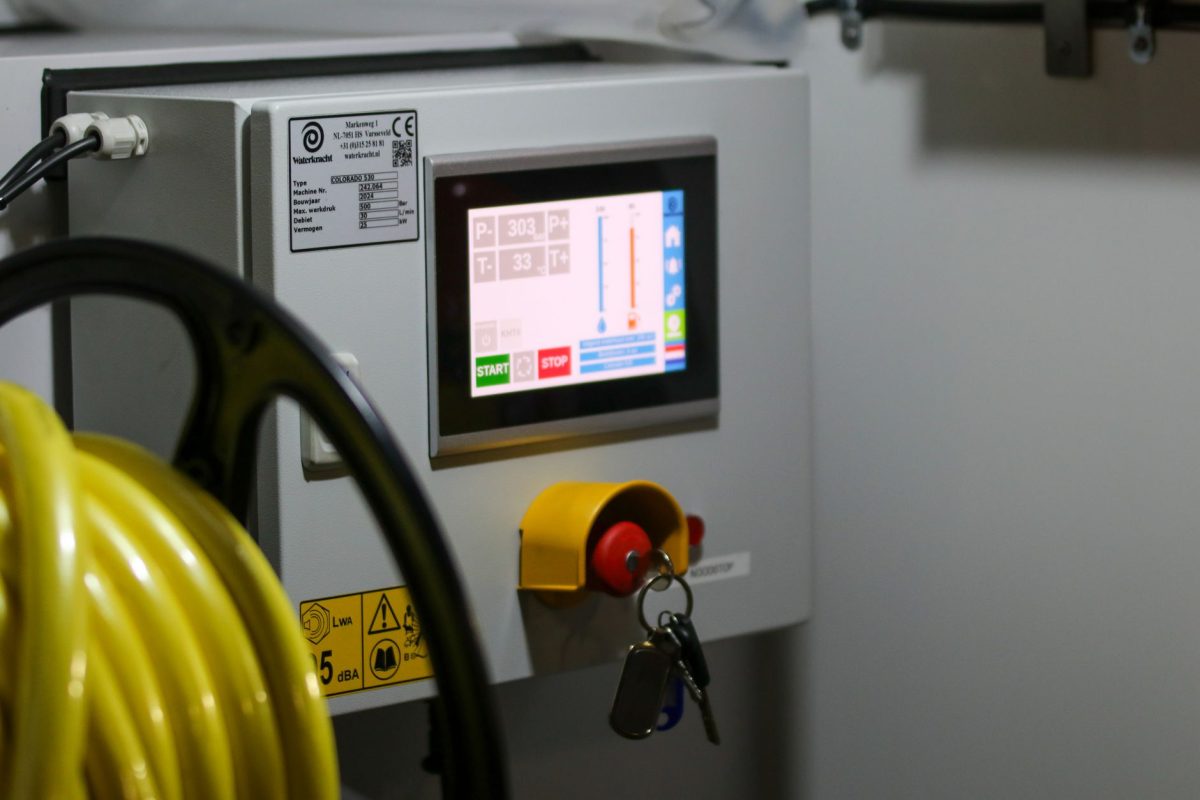
You can buy an integrated unit where the drive is built into the pump, or a standalone VFD controller box that retrofits onto a pump you already own. Both give you soft starts (gentler on the motor and your wiring), steady pressure, and, in the right conditions, lower running costs. If you’re weighing a whole new pump, our guide to the best water pumps for home use by setup covers which pump bodies pair well with a drive.
Fixed speed vs variable speed pump: side-by-side
Here’s how the three approaches compare on the things homeowners actually care about. Prices are rough ranges for a typical single-family home submersible or pressure setup in India and will vary with brand, horsepower, and installer.
| Feature | Fixed-speed + tank | Constant-pressure / VFD |
|---|---|---|
| Upfront extra cost | ₹2,000, ₹8,000 (switch + tank) | ₹8,000, ₹25,000+ (drive/controller) |
| Pressure feel | Swings with demand | Steady across all taps |
| Motor starts | Hard start, frequent cycling | Soft start, fewer full stops |
| Energy at part-load | Runs full power then stops | Can save if run long hours |
| Complexity to repair | Very simple, local fix | Electronic board, specialist |
| Sensitivity to voltage | Tolerant | Needs stable supply / protection |
| Best for | Short daily fills, tight budget | Long runs, whole-house pressure |
Notice I collapsed constant-pressure and VFD into one column. That’s deliberate, because in practice a constant-pressure system almost always is a VFD system with a pressure sensor bolted on.
Do VFD pumps save money?
This is the question I get asked most, and the honest answer is: sometimes, and less dramatically than the sales pitch suggests. A VFD saves energy through the physics of pump curves. When a pump runs at a lower speed to meet lower demand, its power draw drops faster than its flow does. In theory, halving the speed can cut power to roughly an eighth. That’s real, and it’s why VFDs are genuinely efficient in industrial systems that run at part-load all day.
The catch for homes is duty cycle. Most households don’t run their pump for hours at partial load. We run it hard for a short while to fill a tank, then it’s off. A fixed-speed pump filling a tank at full efficiency for 20 minutes a day can easily beat a VFD that’s constantly modulating to hold pressure against a trickle of demand. The drive itself also consumes a small amount of power just being switched on.
Tip from my own setup: When I moved from a fixed-speed pump feeding an overhead tank to a direct VFD pressure system, my comfort shot up but my electricity bill barely moved. The pressure was worth it to me, the savings were not the reason. Buy a VFD for the steady shower, not to slash your bill, unless you genuinely run the pump for long stretches at part-load.
If your real goal is a smaller bill, the biggest levers are pump efficiency, correct sizing, and pipe friction, not the control type. I dig into that in detail in our breakdown of what you actually pay to run a water pump, which shows where the rupees really go.
Is a constant-pressure system worth it?
Worth is about your house, not the product. A constant-pressure system earns its price in specific situations and is overkill in others. Here’s how I’d sort it.
A VFD or constant-pressure system is worth it when:
- You feed the house directly from the pump (no overhead tank) and pressure swings drive you mad.
- You have multiple bathrooms and want a good shower even when another tap runs.
- Your pump short-cycles (rapid on-off), which wears out motors and pressure switches fast.
- You run a long pipe or a tall lift and want gentle soft starts to protect the motor.
- You value comfort highly and don’t mind paying for it.
A fixed-speed system is the smarter choice when:
- Your pump simply fills an overhead tank once or twice a day (gravity gives you steady pressure downstream anyway).
- Your budget is tight and reliability matters more than a perfectly firm stream.
- Your mains voltage is unstable and you’d rather not risk sensitive electronics without a good stabiliser.
- You live somewhere a VFD board would be slow or costly to get repaired.
That overhead-tank point deserves emphasis. If you already lift water to a rooftop tank, gravity delivers reasonably constant pressure to your taps for free. In that case a VFD on the fill pump buys you very little at the tap. Many Indian homes are in exactly this position, which is why fixed-speed still dominates. The pump type also matters here, see our comparison of submersible vs jet pumps to match the body to your well before you spend on the controller.
How to choose your pump control options: a quick walkthrough
When a neighbour asks me which way to go, I run them through the same short sequence. Work through it in order and the answer usually becomes obvious.
- Map your delivery. Does the pump feed an overhead tank, or does it feed taps directly? Tank-fed homes rarely need a VFD; direct-fed homes benefit most.
- Judge your pressure pain. If pressure swings genuinely annoy you daily, that’s a real reason to spend. If you barely notice, don’t.
- Check your supply. Confirm your mains voltage is reasonably stable. If it isn’t, budget for a stabiliser or surge protection before adding a drive.
- Estimate run hours. Long daily part-load running favours a VFD on efficiency; short full-power fills favour fixed-speed.
- Add protection either way. Insist on dry-run protection, a check valve, and correct pipe sizing regardless of control type. This is where reliability is won or lost.
- Get two quotes. Ask installers to price both a quality fixed-speed setup and a VFD option so you can see the real gap for your horsepower.
Watch out: A VFD is sensitive to poor power quality. Voltage spikes and deep sags common on many rural and small-town lines can shorten the life of the drive board, which is the most expensive part to replace. If your supply is rough, either add proper protection or think twice before going electronic. When in doubt about wiring or earthing, use a qualified electrician, this is not the place to guess.
Installation and running realities
A few practical things I’ve learned the hard way, so you don’t have to.
- Sizing still rules. A VFD can’t fix an undersized pump or a choked pipe. If flow is weak at full speed, no amount of clever electronics helps. Get the hydraulics right first.
- Location matters. Drive boxes hate heat, dust, and damp. Mount the controller in a shaded, dry, ventilated spot, not baking on a sunny wall.
- Fewer moving parts, different failure mode. Fixed-speed systems fail mechanically (switches, capacitors) and are cheap to fix locally. VFDs fail electronically and need a specialist or a board swap, plan for that.
- Soft start is an underrated perk. Even if the bill doesn’t drop, the gentle ramp-up reduces water hammer and motor stress, which can extend pump life. That’s a quiet, real benefit.
For the full picture on sizing, wiring, pressure tanks, and how all these pieces fit together, read our complete owner’s guide to home water pumps and pressure systems. It ties every one of these decisions into one place. You can also browse the rest of the Pumps & Pressure Systems category for related how-tos.
One safety note: if your water supply serves drinking needs, no control system changes water quality. Test your water at a certified lab and treat it appropriately, pressure control and water safety are separate problems. Public resources like the US EPA private wells pages and India’s Central Ground Water Board are good starting points for groundwater and testing guidance.
Frequently Asked Questions
Is a constant-pressure system worth it?
It’s worth it if you feed taps directly from the pump and steady pressure matters to you, multiple bathrooms, showers that don’t fade when another tap opens. If your pump simply fills an overhead tank, gravity already gives you constant pressure, so the extra spend usually isn’t justified.
What is a VFD pump controller?
A VFD, or variable-frequency drive, is an electronic controller that varies the frequency of power to the motor, changing its speed on the fly. Instead of switching the pump fully on or off, it dials the speed up or down to match demand, giving smooth soft starts and steadier pressure.
Do VFD pumps save money?
Sometimes, but rarely as much as advertised for homes. VFDs save most when a pump runs long hours at part-load. Typical households fill a tank in short full-power bursts, where a fixed-speed pump can be just as efficient. Buy a VFD mainly for pressure comfort, not to slash your bill.
What’s the difference between constant-pressure and VFD?
They overlap almost completely. “Constant pressure” describes the outcome, steady pressure at the tap, while “VFD” describes the method, electronically varying motor speed. Nearly every modern constant-pressure home system uses a VFD internally, so shops often use the two terms to mean the same product.
Can I add a VFD to my existing pump?
Often yes. Standalone VFD controllers retrofit onto many existing single-phase and three-phase pumps. Confirm your pump and motor are compatible, that your power supply is stable, and have an electrician verify wiring and earthing. Mount the drive somewhere cool, dry, and dust-free for a long service life.
Putting it together
If I had to sum it up: buy a VFD or constant-pressure system for the feel of the water, not for the savings. If you feed taps directly and swinging pressure drives you up the wall, the extra spend genuinely improves daily life. If your pump just tops up an overhead tank, a good fixed-speed setup with proper protection is cheaper, tougher, and easier to fix, and gravity gives you steady pressure for free. Match the control to your house, get the hydraulics right first, and you’ll be happy with either path.
Still weighing your options? Take your time with our complete guide to home water pumps and pressure systems, it connects control choice to sizing, tanks, and running costs so you can decide with confidence rather than on a salesperson’s word.