Here’s the question that stalls most first-time buyers: should you treat every drop of water entering the house, or just clean up the one tap you actually drink from? Getting the whole house vs point of use filter decision wrong is expensive, I’ve seen neighbours spend on a big cabinet at the inlet when a small under-sink unit would have solved their real problem, and others buy three countertop jugs when a single mainline filter would have saved the plumbing.
In 15 years of running my own borewell, pump, and overhead-tank setup, I’ve fitted both kinds and lived with the results. This guide lays out the three main placements side by side, gives you a plain verdict for each situation, and helps you match the setup to your actual water problem, budget, and household size. If you want the wider framework first, start with our complete guide to choosing a home water treatment system.
Key Takeaways
- Whole-house (POE) treats water at the point of entry, best for problems you feel everywhere: sediment, iron staining, hardness, chlorine smell.
- Point-of-use (POU), under-sink and countertop, treats only where you drink, and is the only sensible place for RO because you don’t want to reject 50% of every bath.
- A full whole-house sediment-plus-carbon setup usually runs roughly ₹12,000, ₹35,000 installed; a good under-sink RO or gravity countertop is roughly ₹4,000, ₹18,000.
- Most well and borewell homes end up with both: a whole-house filter to protect plumbing and appliances, plus a POU unit for drinking water.
- Placement should follow your water test results and real costs, not a salesperson’s pitch.
The three placements, in plain terms
Filters are grouped less by what they remove and more by where they sit in your water’s journey. That single choice, where to treat home water, decides how much water you clean, how big the unit is, and how much you spend on cartridges. Three placements cover almost every household.
Whole-house (point of entry / POE)
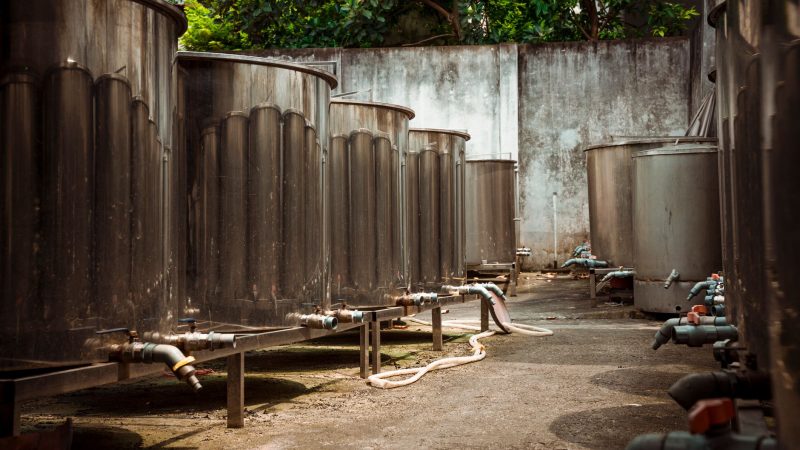
A POE system installs on the main line, right after the pump or where the municipal supply enters, and usually before the overhead tank. Every tap, shower, washing machine, and toilet downstream gets the same treated water. These are the tall cabinets or ganged cartridge housings you see bolted to a wall near the sump.
POE shines at “whole-home” problems. If your borewell throws sand after the monsoon, or iron leaves orange streaks on the sink and yellows your laundry, or hard water crusts every geyser element, you want to fix that before the water splits into a dozen pipes. Fixing it at each tap would be madness.
Under-sink point-of-use (POU)
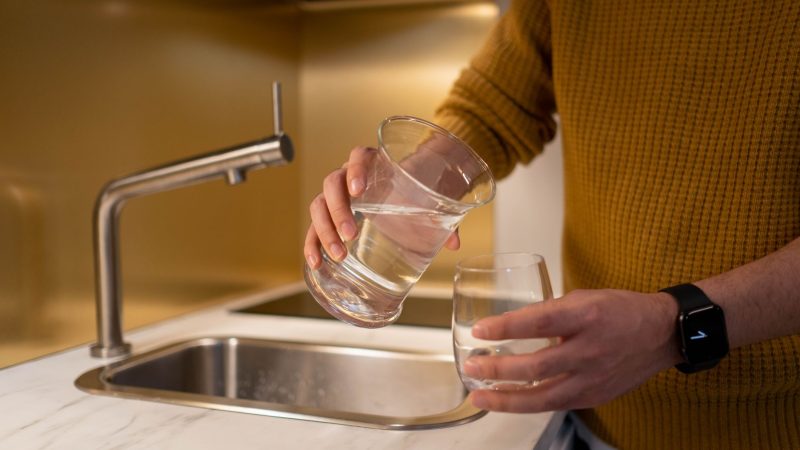
An under-sink unit hides in the cabinet below your kitchen sink and feeds a dedicated tap (or your existing one). This is the natural home for reverse osmosis, because RO wastes water by design, treating only the litres you drink and cook with keeps that waste tiny. It’s the go-to for high TDS, fluoride, nitrate, and dissolved salts that a whole-house carbon filter can’t touch.
Countertop
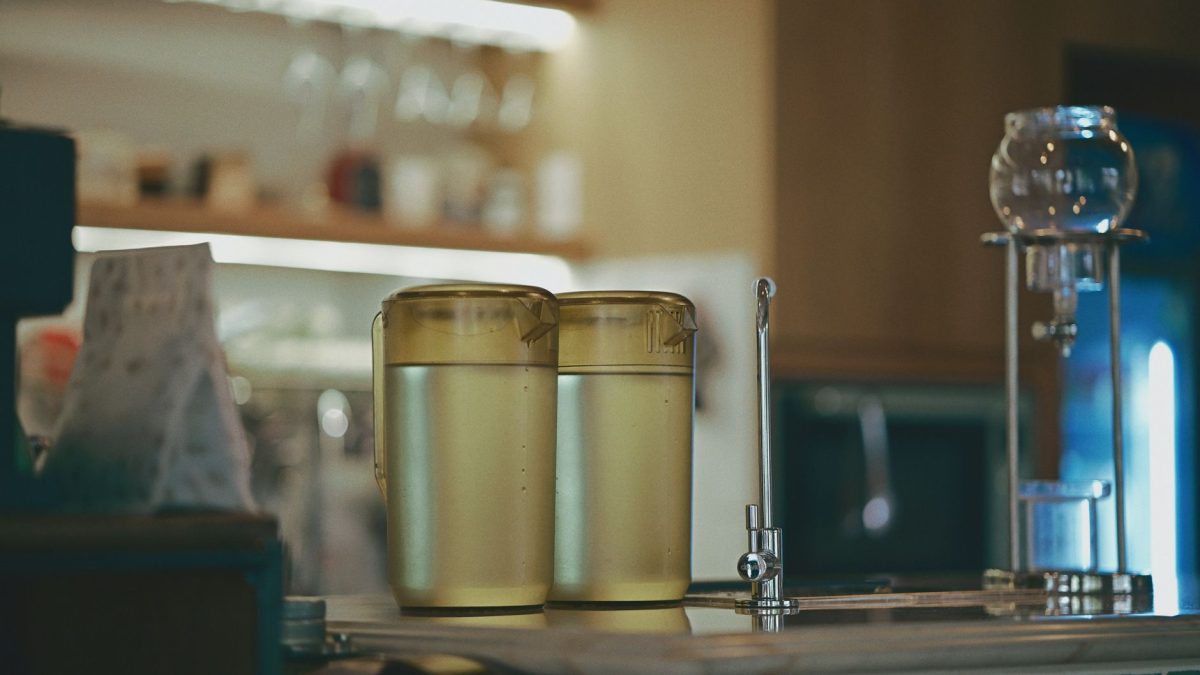
Countertop covers gravity pots, plug-in RO/UV units that sit on the slab, and faucet-mount filters. No plumbing, no drilling, you fill a chamber or clip onto the tap. It’s the lowest-commitment option, ideal for renters, small families, and anyone testing the waters before a bigger spend. The trade-off is smaller capacity and more manual refilling.
POE vs POU vs countertop: the comparison table
Here’s the whole comparison in one view. Costs are realistic installed ranges for a typical Indian household in 2026; your quotes will vary with brand, water quality, and city.
| Factor | Whole-house (POE) | Under-sink (POU) | Countertop |
|---|---|---|---|
| What it treats | All water in the home | One tap (usually kitchen) | One tap or a batch you fill |
| Best for | Sediment, iron, hardness, chlorine, smell | TDS, fluoride, nitrate, salts (RO) | Basic taste/odour, backup drinking water |
| Typical tech | Sediment + carbon + softener/iron media | RO + UV, or multi-stage carbon | Gravity carbon/UF, small RO/UV, faucet filter |
| Installed cost | ₹12,000, ₹35,000+ | ₹4,000, ₹18,000 | ₹1,500, ₹9,000 |
| Annual upkeep | ₹2,000, ₹6,000 | ₹1,500, ₹4,000 | ₹800, ₹2,500 |
| Water wasted | Very little (unless softener regen) | Some, if RO (reject water) | Little to none, unless RO |
| Install effort | Plumber, mainline cut-in | Moderate; drill for tap + drain | None, plug and fill |
| Protects appliances? | Yes, geysers, washing machine, pipes | No | No |
Tip: On my own borewell I run a whole-house sediment plus carbon stack at the inlet, then a single under-sink RO+UV for the kitchen. The mainline filter takes the grit and iron load off the RO, so my RO membrane lasts noticeably longer between changes. Layering placements isn’t overkill, it’s how you stop one unit from doing a job it was never built for.
How to choose: match the placement to your problem
The mistake I see most often is buying the filter first and diagnosing the water second. Reverse that order. Once you know what’s actually in your water, the right placement is usually obvious. Work through these steps.
- Test your water first. Get a certified lab report covering TDS, hardness, iron, fluoride, nitrate, and bacteria. This one document decides everything downstream, never guess from taste alone.
- Sort problems into “everywhere” vs “just drinking.” Staining, scale, smell, and sand are everywhere problems, that’s POE. High TDS, fluoride, and nitrate are drinking-water problems, that’s POU.
- Size it to your household. A family of six through a hard-water borewell needs more capacity and flow than a two-person flat on soft municipal water.
- Set a realistic budget that includes yearly cartridges and membranes, not just the sticker price. Upkeep is where cheap units bite back.
- Decide if you need both. Most well homes do, read the “do I need both” section below before committing.
Pick whole-house if…
Choose POE when the problem shows up beyond the kitchen: rust stains in the bathroom, scale on the shower glass, sediment clogging aerators, or a chlorine smell in every room. If you’re on a borewell with iron or hardness, a whole-house filter also protects expensive kit, geysers, the washing machine, and the pipes themselves. Our roundup of the best whole-house filters for well and borewell homes covers the specific media that handle each of these.
Pick point-of-use if…

Choose POU, under-sink or countertop, when your only real issue is drinking-water quality: high dissolved solids, fluoride, nitrate, or a taste you want gone. There’s no point running RO on your toilet flush. If you’re weighing RO against softening because you have both hardness and high TDS, our breakdown of what a softener versus an RO actually fixes will keep you from buying the wrong tool.
Pick countertop if…
Choose a countertop unit when you rent, when drilling isn’t an option, when the household is small, or when you simply want clean drinking water without a project. A good gravity pot or plug-in RO/UV handles day-to-day needs and can move house with you. It’s also a fine stopgap while you save for a permanent setup.
Do you need both whole-house and point-of-use?
For a lot of well and borewell homes, honestly, yes, and it’s not upselling. The two placements do genuinely different jobs. Think of them as a division of labour rather than a redundancy.
- The whole-house filter handles bulk problems, sediment, iron, hardness, chlorine, so your plumbing and appliances stay clean and your drinking-water unit isn’t fighting a losing battle.
- The point-of-use unit does the fine polish, RO or UV, to make the water genuinely safe and pleasant to drink and cook with.
- Together they last longer. Removing grit and iron upstream means your RO membrane and UV lamp face a far lighter load, stretching their life and cutting cartridge costs.
If your water test comes back clean on TDS and fluoride but heavy on sediment or iron, you might need only POE. If TDS is the sole villain and everything else is fine, POU alone may do. The lab report is what tells you, which is exactly why step one matters so much. For water safety and bacterial contamination, always confirm treatment adequacy with a certified lab or a qualified professional before you rely on any filter for health protection.
Which placement is most cost-effective?
“Cheapest” and “most cost-effective” aren’t the same thing. A countertop jug has the lowest sticker price, but if your real problem is iron staining every tap, it does nothing for the damage happening in your pipes, so it’s the least cost-effective for that job.
Cost-effectiveness is about cost per problem solved. A ₹15,000 whole-house filter that stops geyser scale and laundry staining across the whole home can pay for itself faster than three countertop units that only clean drinking water. Meanwhile, if you drink 20 litres a day and your only issue is TDS, a ₹6,000 under-sink RO beats a ₹30,000 whole-house RO that would waste half your bath water. Match the spend to the problem’s footprint, weigh it against the running costs in our true cost and payback breakdown, and the cheap-versus-effective question answers itself.
For a general sense of what levels of contaminants matter, drinking-water guidance from bodies like the World Health Organization and India’s Bureau of Indian Standards is worth a look, but they inform targets, they don’t replace testing your own supply.
Frequently Asked Questions
Is whole-house filtration better than under-sink?
Neither is universally better, they solve different problems. Whole-house wins for sediment, iron, hardness, and smell that affect every tap and your appliances. Under-sink wins for drinking-water issues like high TDS, fluoride, and nitrate. Many homes need both, because one protects plumbing and the other polishes what you drink.
Do I need both whole-house and point-of-use filters?
Often, yes, especially on borewell water. A whole-house filter removes bulk sediment, iron, and hardness so your pipes and geysers stay clean, while a point-of-use RO or UV handles fine drinking-water safety. If your only issue is TDS, POU alone may do. Let your lab test decide.
Which filter placement is most cost-effective?
The most cost-effective placement is the one that fixes your biggest problem with the least waste. For whole-home staining or scale, a mainline filter beats several countertop units. For drinking-water TDS alone, an under-sink RO beats a costly whole-house RO. Always weigh cartridge and membrane running costs, not just purchase price.
Can I run RO on my whole house?
You can, but it’s rarely wise. Whole-house RO rejects a large share of every litre, including bath, laundry, and toilet water you never drink, so it wastes water and money. RO belongs at the point of use, treating only your drinking and cooking supply. Handle hardness whole-house with a softener instead.
Where should a whole-house filter be installed?
Fit it on the main line at the point of entry, after the pump or where the supply enters, and typically before the overhead tank. That way every downstream tap and appliance gets treated water. A licensed plumber should handle the mainline cut-in and add bypass valves for easy cartridge changes.
Putting it together
Whole-house filters clean everything and protect your home; point-of-use units clean the water you actually drink; countertop keeps it simple and portable. There’s no single winner, the winner is whichever matches your water test, household size, and budget. Most well and borewell homes land on a sensible pairing: a mainline filter for the bulk problems and a POU unit for drinking water.
Test first, place second, and you’ll spend once instead of twice. When you’re ready to map out your full setup, our guide to choosing the right water treatment system for your home walks you through it step by step, no pressure, just a clear path from your lab report to the right filter in the right place.